


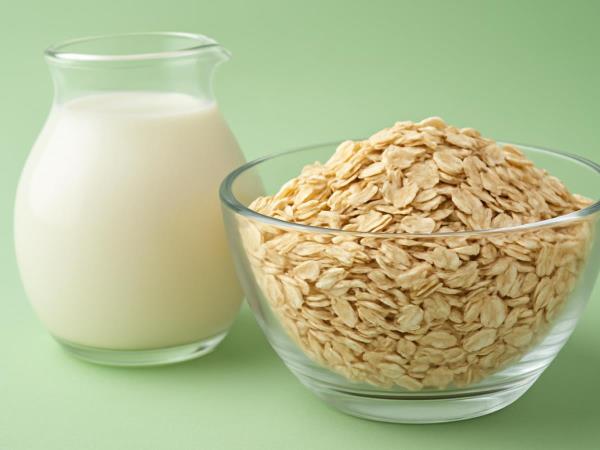


Forget Cow's Milk: Make Your Own Oat Milk With Just Two Ingredients
expert, nutritionist
Picture this: a drink so simple that two ingredients and five minutes are all it takes, yet it's become one of the most talked-about alternatives to dairy on the planet. No fancy equipment, no preservatives, no trip to a specialty store — just oats, water, and a blender. It sounds almost too easy to be one of the biggest food trends of the decade, but oat milk has quietly taken over lattes, cereal bowls, and grocery store shelves everywhere, and now you can skip the markup entirely and make it yourself at home.
Oat milk's rise isn't just a wellness fad. Actress Rachel Bilson, known for her role on The O.C., has spoken publicly about her enthusiasm for oat milk, using it regularly in her kitchen for pancakes, overnight oats, and banana bread, and pointing to its lower environmental footprint compared to dairy as one of the reasons she reaches for it (VegNews). She's far from alone — oat milk has become a fixture on the menus of major coffee chains and a pantry staple for home cooks who want something that steams, froths, and pours a lot like traditional milk.
Why People Are Swapping Cow's Milk for Oat Milk
You'll find oat milk sitting on store shelves right next to rice and soy milk, and it's become a go-to option for anyone who doesn't tolerate lactose well. Many nutritionists also point out that most adults simply don't need to keep drinking milk in the same quantities they did as children — which is part of why plant-based alternatives like oat milk have found such a large audience (Healthline).
Oat milk brings a few genuine advantages to the table compared to cow's milk. It's naturally rich in fiber, and depending on how it's made, it can contain a modest amount of protein and a mix of vitamins and minerals. The carbohydrates it contains are mostly complex and fiber-bound, which is a very different story from refined sugar — this type of carbohydrate is generally considered supportive of regular digestion rather than something to avoid (Harvard T.H. Chan School of Public Health).
Some of the enthusiasm around oat milk also comes from oats' well-documented soluble fiber content, known as beta-glucan. The U.S. Food and Drug Administration allows foods containing at least 3 grams per day of oat beta-glucan to carry a heart-health claim, based on research showing a link between this fiber and healthier cholesterol levels as part of an overall diet low in saturated fat (U.S. FDA / eCFR {-15705}101.81). It's worth noting that homemade oat milk, made simply from oats and water, generally contains meaningfully less beta-glucan per glass than a concentrated dose used in clinical studies — so think of it as one helpful habit among many, not a stand-alone fix. For a closer look at how fiber-rich carbohydrates fit into a balanced diet, see Foodwhisper's The Role of Carbohydrates in a Healthy Diet.
People have long associated oats with steadier energy and smoother digestion, and there's a practical explanation: the fiber in oats moves slowly through the digestive tract, which is one reason oat-based foods are often recommended as part of a routine to support regularity. Traditional folk wisdom also credits oats with supporting the body's natural detox pathways and even helping calm the nervous system after a stressful day — claims that haven't been rigorously tested in clinical trials, so it's best to think of them as time-honored habits rather than medical treatments. If digestion and fiber are topics you're curious about, Foodwhisper's Fiber Is the Express Train to Your Happiness covers other high-fiber foods worth adding to your plate.
As for the folk belief that oat milk can help skin recover after a day in the sun — that's a lovely piece of grandmother's wisdom, but it isn't something backed by clinical research, and it's no substitute for proper sun protection and aftercare. Enjoy oat milk for what it reliably offers — fiber, hydration, and a lighter environmental footprint — rather than as a cure-all.
If you're weighing oat milk against other plant-based options, it helps to know the trade-offs: store-bought versions can vary a lot depending on added oils, sweeteners, and stabilizers, so reading the label matters just as much as the "oat milk" name on the carton (GoodRx Health). Making it yourself sidesteps that problem entirely, since you control exactly what goes in.
How to Make Homemade Oat Milk
Ingredients:
- 1 liter of water
- 8 heaping tablespoons of rolled oats
Instructions:
Start by grinding the oats into a fine flour. It's best to do this step fresh, right before you make the milk, so the oats retain as much of their nutritional value as possible. Combine the ground oats with the water and mix thoroughly for a few minutes so the two blend together well. Then strain the mixture through a fine sieve or cheesecloth to separate the smooth milk from the leftover oat pulp. Feel free to adjust the ratio to your taste — adding an extra tablespoon or two of oats will give you a thicker, creamier result.
Many people drink up to a liter of homemade oat milk over the course of a day. If you're using it alongside meals, it's a good habit to leave roughly 30 minutes before and after eating so it doesn't interfere with digestion of other foods. A spoonful of honey stirred in is a simple way to round out the flavor.
The Bottom Line
Homemade oat milk is inexpensive, easy to control, and a genuinely useful option for people cutting back on dairy or looking to add more fiber to their day. Like any single food, it works best as part of a varied, balanced diet rather than a miracle fix — and if you have a specific health condition such as diabetes or high cholesterol, it's worth chatting with a doctor or registered dietitian about how oats and oat milk fit into your overall plan. For more on how everyday foods affect nutrient absorption, Foodwhisper's Foods That Improve Nutrient Absorption and Foods We Use Incorrectly are worth a read.
Information on this website is for educational purposes only and is not medical advice.
expert, nutritionist
 Would you like to be informed about news on the website?













|

