


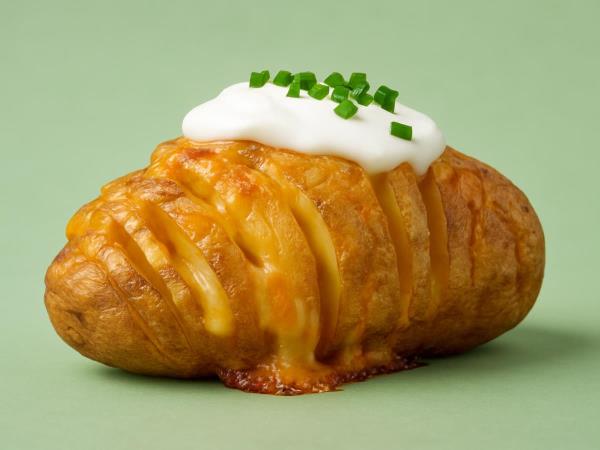


One Cut That Changes Everything: The Trick That Turns Ordinary Potatoes Into the First Dish Gone From the Table
expert, nutritionist
Forget complicated recipes. There's one simple cut that transforms a humble potato into a dish people ask for again and again — and the secret isn't in the toppings, it's in the knife work. Cheese, butter, cream, and Parmesan tucked between crisp, fanned-out slices: this baked stuffed potato is the kind of recipe that looks impressive but is almost impossible to get wrong, even on your very first try.
A Weeknight Regular in Home Kitchens Everywhere
You don't need to be a professional cook to fall for this dish. Home cooks who share their weeknight dinners online often describe the same moment: the potato comes out of the oven bubbling with melted cheese, and it disappears from the table before it even has time to cool down. One woman who posted about the recipe in a family cooking group wrote that her teenagers, who normally pick at vegetables, went back for seconds — proof that a familiar ingredient, prepared a little differently, can win over even picky eaters.
The Secret Isn't the Filling — It's the Cut
You can mix and match the filling ingredients however you like. We recommend cheese, butter, cream, and a handful of fresh vegetables. But the real secret isn't in what you put between the slices — it's in how you cut the potato itself. This technique is widely known as the Hasselback method, named after the Stockholm restaurant where it was popularized, and it's what gives this dish its signature look and texture.
Wash the potatoes well; there's no need to peel them, since much of a potato's fiber and nutrients sit close to the skin. When you slice it into thin rounds, be careful not to cut all the way through. The slices at the bottom should stay connected — this is what gives the dish its compact, fan-like shape, helps it cook more evenly, and lets the juices from the filling mingle pleasantly between the layers as they bake.
One more tip: if you slice the potato too thin, filling each little gap becomes fiddly and time-consuming. Aim for slices about the thickness of a coin — thin enough to fan out and crisp up, thick enough to stay easy to stuff.
Building the Layers
Slice your cheese and butter into thin pieces too (chilling them slightly beforehand makes them much easier to cut cleanly). Tuck cheese and butter alternately between the potato slices, working your way along the whole fan.
Once assembled, season everything and drizzle generously with olive oil before placing the potatoes in the oven. Olive oil is a staple of the Mediterranean diet, which nutrition researchers have studied extensively for its links to heart health, and according to Harvard Health, even modest daily amounts have been associated with better cardiovascular markers in long-term population studies — though, as with any single food or ingredient, it works best as part of an overall balanced way of eating rather than a stand-alone fix.
Bake at 220{-15696}C (428{-15696}F) for 45 minutes.
The Finishing Touch
For an even richer flavor, pour cream over the potatoes toward the end of baking and sprinkle generously with grated Parmesan. Hard, aged cheeses like Parmesan are naturally lower in carbohydrates and can add a satisfying, savory depth without needing much of it — Foodwhisper.com has previously looked at how small amounts of cheese fit into a balanced eating pattern if you'd like to read more on that. Return the dish to the oven for another 10 to 15 minutes, or until the potatoes are fully cooked through — timing will vary depending on the size of your potatoes.
Serving Ideas
Garnish with a dollop of sour cream and a scatter of fresh vegetables. This dish pairs wonderfully with a crisp green salad, and it's just as much at home next to roasted meat. Taste-wise, it's easily one of the most memorable potato dishes you'll make — see for yourself.
A Quick Word on Potatoes and Health
Potatoes have an unfair reputation. On their own, they're naturally fat-free and a genuinely useful source of potassium, vitamin C, and fiber, according to the USDA FoodData Central database. What tends to shift a potato dish from "wholesome" to "occasional treat" is how it's prepared — deep-frying, for instance, has been the subject of research such as a study covered by Foodwhisper.com on fried food and mental wellbeing. Baking, as in this recipe, is generally considered a gentler cooking method, and pairing potatoes with vegetables, olive oil, and modest amounts of dairy — as this dish does — is a reasonable way to enjoy them as an occasional part of a varied diet. As always, if you have specific health or dietary concerns, it's worth checking in with a doctor or registered dietitian for guidance tailored to you.
Information on this website is for educational purposes only and is not medical advice.
expert, nutritionist
 Would you like to be informed about news on the website?











|

