




Sugar Is the New Fat - So What's the New Sugar?
expert, nutritionist
We eat too much sugar. Far too much. The World Health Organization recommends keeping "free sugars" — the sugar added to food, not the kind found naturally in whole fruit — under 10% of daily energy intake, and ideally under 5% for extra benefit, which works out to roughly six teaspoons a day for the average adult (WHO Guideline: Sugars Intake for Adults and Children). Most of us blow past that number before lunch.
At the same time, decades of chasing bigger profit margins have hollowed out a lot of everyday food. Strip the fat out of milk and you don't get a "healthier" product — you get a different product, engineered to be sold twice from the same raw material. Low-fat yogurts and "light" spreads follow the same playbook. If cutting fat from food actually made it better for you by default, we'd all be thinner by now.
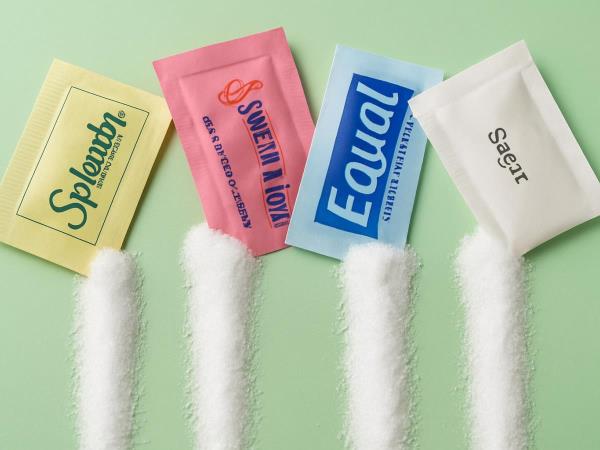
Sugar is now walking the same path fat walked twenty years ago. Researchers, nutritionists and a fair number of self-appointed experts largely agree that excess sugar intake is linked to cardiovascular disease, type 2 diabetes and weight gain. And because the food industry never sits still, sugar itself has multiplied into an entire family of substitutes — some old, some newly fashionable, all claiming to be the "safe" version of sweet.
When a Hollywood A-Lister Had to Give It Up
Sugar substitutes aren't just a wellness-blog talking point. Actor Tom Hanks went public with his own reckoning after being diagnosed with type 2 diabetes, telling Radio Times he'd spent decades eating the way "the lazy American generation" does before the diagnosis forced a rethink of his sugar intake (as widely reported, including by Elephant Journal). His experience is a useful reminder that sugar substitutes aren't a fad diet trend — for people managing blood sugar, they can be a genuine tool, which is exactly why it's worth understanding what's actually in the bottle.
Sugar Alcohols: Not Sugar, Not Alcohol
The biggest category of substitutes is sugar alcohols, or polyols — a slightly misleading name, since they're neither sugar nor alcohol in the everyday sense. Chemically, they're carbohydrates that share a structural similarity with alcohol molecules, and small amounts occur naturally in fruit, which is why they're sometimes marketed as the "natural" sweetener. Foods labeled sugar-free are usually sweetened with one of these compounds.
Their appeal is real: most have a much smaller effect on blood sugar than table sugar, and none of them feed the oral bacteria responsible for cavities (FDA overview of sweeteners). But "fewer calories than sugar" varies enormously between them — this is not one ingredient, it's a family, and each member behaves differently in the body. If sweeteners and blood-sugar swings are already a topic you think about, our piece on 3 Tricks to Never Be Hungry looks at how everyday choices affect appetite and blood sugar between meals.
Xylitol (E967)
Found naturally in berries, mushrooms and oats, and commercially produced from corn cobs, xylitol delivers roughly 2.4 calories per gram — about 40% fewer than table sugar's 4 calories per gram — with a glycemic index of around 12, compared to sugar's 58–65. It's the sugar alcohol most associated with dental health: because oral bacteria can't ferment it the way they ferment sugar, xylitol is a common ingredient in sugar-free chewing gum, and research has linked it to reduced cavity formation (sugar alcohol comparison, Diablo Sugar Free). It's also one of the sweeteners eaten in excess that shows up in bloating complaints, as we cover in Food That Makes You Fat, Even If It Does Not Fatten.
Maltitol (E965)
Made by hydrogenating maltose derived from starch, maltitol delivers 75–90% of sugar's sweetness at about 2.1 calories per gram, with a glycemic index near 36 — meaningfully lower than sugar's, but not negligible, which is why it's not considered ideal for tightly controlled low-carb or diabetic diets. It's the workhorse sweetener behind most sugar-free chocolate, candy and diet baked goods.
Sorbitol (E420)
With a glycemic index of only around 4, sorbitol shows up frequently in diet soft drinks and cough syrups. Its downside is digestive tolerance: the FDA requires a laxative-effect warning label on foods likely to deliver more than 50 grams of sorbitol a day, and some people experience bloating or discomfort at far smaller doses (FDA Nutrition Facts Label guidance on sugar alcohols).
Erythritol (E968)
Erythritol looks close to perfect on paper: a glycemic index of essentially 0 and only about 0.2 calories per gram — roughly 95% fewer than sugar. Contrary to a persistent rumor, Coca-Cola does not hold the patent on erythritol itself; the compound has been fermented industrially since 1990, mainly by Japanese manufacturers. What Coca-Cola and other beverage companies do hold are patents covering specific uses of erythritol in drink formulas, which is a different thing entirely. It's often blended with stevia, a plant extract that can taste up to 300 times sweeter than sugar.
Where erythritol's story has gotten more complicated is cardiovascular research. A 2023 Nature Medicine study from the Cleveland Clinic found that people with higher blood erythritol levels experienced cardiac events at a higher rate over a three-year follow-up period, and a 2024 follow-up study observed changes in platelet activity after erythritol intake in healthy volunteers (Cleveland Clinic newsroom; original paper: Nature Medicine). It's worth being clear-eyed about what this does and doesn't mean: this is observational and early-stage research, erythritol remains classified as safe by food regulators, and the researchers themselves called for further long-term studies rather than a change in guidance. Still, if you have existing cardiovascular risk factors, it's a reasonable thing to mention next time you see your doctor or dietitian, rather than something to self-diagnose from a blog post.
So What Should You Actually Do With This?
None of these sweeteners are a magic loophole, and none of them are secretly dangerous for the average person eating them in ordinary amounts. The honest summary: they're tools, each with its own trade-offs on calories, blood sugar impact, digestive tolerance and — in erythritol's case — an open research question. Reading the label and knowing which polyol you're actually eating matters more than reaching for anything marked "sugar-free" on autopilot. If your goal is steadier blood sugar and less mid-afternoon crashing, pairing whichever sweetener you choose with the kind of everyday habits covered in our guide to fat burning and blood sugar will do more for you than the sweetener choice alone.
Information on this website is for educational purposes only and is not medical advice.
expert, nutritionist
 Would you like to be informed about news on the website?















|

