


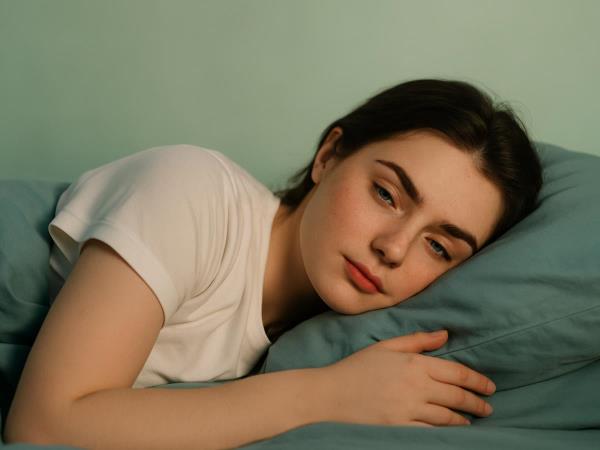


Why Do You Sleep Like a Snail and Wake Up Exhausted Every Morning?
expert, nutritionist
You go to bed at a reasonable hour, you don't feel particularly stressed, and yet you wake up feeling like you never slept at all. If that sounds familiar, you're far from alone — and the culprit is rarely just one thing. It's usually a handful of small, fixable habits stacking up against you: the temperature of your room, that afternoon espresso, a nightcap you thought was helping you unwind, or even the pet sleeping on your feet.
Media mogul Arianna Huffington has spoken publicly for years about the wake-up call that changed how she thought about sleep: in 2007, exhausted and badly sleep-deprived, she collapsed from sheer fatigue, hit her head on her desk, and broke her cheekbone. That experience led her to research sleep science extensively and eventually write The Sleep Revolution, where she argues that treating sleep as a luxury rather than a biological necessity is one of the most common — and costly — mistakes people make. Her story is a useful reminder that "pushing through" tiredness has real limits.
Is a Warmer or a Cooler Room Really Better for Sleep?
Before getting into daytime habits, it's worth addressing the room itself — because this is where a lot of well-meaning advice gets it backwards. Research consistently points toward a cooler bedroom being better for sleep than a warm one. The Sleep Foundation notes that most adults sleep best with the thermostat somewhere between 65–68{-15696}F (roughly 18–20{-15696}C), while the National Sleep Foundation puts the broader comfortable range at 60–67{-15696}F (about 15.5–19.5{-15696}C). Interestingly, a 2023 study covered by the Sleep Foundation found that the "right" temperature also depends heavily on your bedding — with a heavier duvet, people slept comfortably across a much wider temperature range than with a thin sheet.
Why does the room matter so much? Your body needs to shed heat as part of falling and staying asleep, and it can only do that efficiently through sweating and radiating warmth into cooler surrounding air. If the room is too warm, your body has to work harder to cool down, which can mean more thirst, more trips to the bathroom, and — during heat waves in particular — added strain on the heart and nervous system. The American Heart Association points out that temperature-disrupted sleep means less time in the deeper sleep stages that support memory and physical recovery, and has also been linked with higher blood pressure over time. If you want to go deeper on heat-related warning signs, we've covered how to recognize heat stroke before it surprises you.
The takeaway: if you're sleeping restlessly in a warm room "because that's supposedly optimal," the evidence actually points the other way — a cooler room, paired with the right amount of bedding for your comfort, tends to work better for most people.
Caffeine: Your Morning Ally, Your Midnight Enemy
A cup of coffee in the morning is, for most people, a genuine pleasure and a gentle pick-me-up. The problem starts later in the day. Caffeine has a half-life of roughly 5–6 hours in the body, meaning a coffee at 2pm can still have a meaningful amount of caffeine circulating in your system at bedtime. One of our earlier deep dives into sleep and metabolism touches on exactly this — reducing caffeine after 2pm is one of the simplest, most evidence-backed changes people can make.
There's also a tolerance effect worth knowing about: if you're a habitual daily coffee drinker, your body adjusts to having caffeine in its system regularly, and skipping it — even for one day — can itself disrupt your sleep and mood as your body recalibrates. That's not a reason to quit abruptly on a whim; if you're looking to cut back, doing it gradually tends to go far more smoothly than stopping cold turkey.
Exercise: Timing Is Everything
Movement is one of the best things you can do for sleep quality overall — but timing matters. Intense exercise raises your core body temperature, heart rate, and adrenaline, all of which work against the wind-down your body needs before bed. As a general rule of thumb, try to finish vigorous workouts at least 3 hours before you plan to sleep. Think of it this way: it's hard to ask your body for maximum physical effort and then expect it to switch to "calm and ready for sleep" an hour later — the two states don't transition instantly.
Alcohol's Sneaky Sleep Sabotage
Alcohol is often misunderstood as a sleep aid because it can make you feel drowsy initially. In reality, it tends to fragment sleep later in the night, reducing the deeper, more restorative stages and often causing early waking. How much it affects you can depend on body weight, age, sex, tolerance, and — as many people notice anecdotally — the quality of what was consumed, with cheaper wine in particular sometimes being blamed for restless nights and vivid dreams. If you drink, giving yourself several hours of buffer before bed is generally a safer bet than a nightcap right before lights-out.
What About Pets in the Bed?
This one turns out to be genuinely mixed in the research, which is reassuring if you love sharing your bed with a dog or cat. A large Swedish cohort study published in Scientific Reports, involving thousands of participants, found no consistent link between dog ownership and worse sleep — though cat owners were somewhat less likely to hit the recommended 7 hours per night. Other smaller studies cited in that same research found that around 20% of pet owners describe their pets as disruptive to sleep, while many others report feeling calmer and more secure with a pet nearby. In other words: if your pet doesn't bother your sleep, there's no strong reason to banish them from the bedroom on principle. If you do wake up frequently because of a restless pet, it may be worth experimenting with a pet bed nearby instead of on the mattress itself.
Baths, Meditation, and Winding Down
A warm bath or shower, ten minutes of quiet meditation, or simply sitting somewhere calm before bed can help signal to your nervous system that the day is winding down. Many people report feeling more alert immediately afterward — that's normal; the relaxation effect tends to catch up with you once you're actually lying down, often within the hour.
Respect Your Body Clock
However packed and dynamic your life is, your body still runs on a fairly fixed internal clock — your circadian rhythm. If you're used to going to bed around 10pm, shifting that suddenly (even for something fun) tends to catch up with you: you'll likely feel groggy and unproductive the next afternoon, and may then struggle to fall asleep again at your usual time the following night. Keeping a consistent sleep and wake schedule, even on weekends, is one of the most underrated tools for feeling rested.
Information on this website is for educational purposes only and is not medical advice.
expert, nutritionist
 Would you like to be informed about news on the website?















|

