


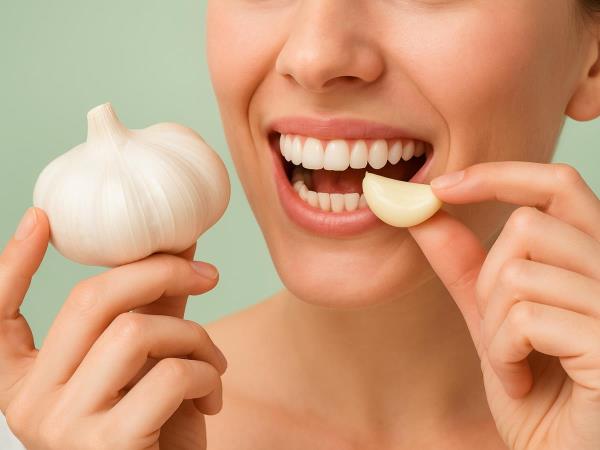


Not All Garlic Is Created Equal: Why That Perfect White Bulb From the Supermarket Might Not Be Your Best Choice
expert, nutritionist
Picture the garlic bulb in your kitchen right now: bright white, no roots, no blemishes, and somehow it's been sitting in your pantry for months without a single green sprout. That "perfect" appearance isn't an accident of nature. It's usually the result of a long industrial journey — and knowing what that journey looks like can change the way you shop.
The late chef and writer Anthony Bourdain was famously particular about garlic, insisting it deserved careful handling and dismissing the pre-peeled, pre-minced jars found in supermarkets as a poor substitute for the real thing. He wasn't alone — plenty of professional cooks say the same: chefs who work with both imported and local garlic can immediately tell the difference in texture, juiciness, and flavor.
China grows most of the world's garlic — by a wide margin
According to agricultural production data compiled from FAO figures, China accounts for somewhere around 73–80% of all the garlic grown on the planet, dwarfing every other producer combined. That scale is what keeps prices so low — but scale and quality don't always travel together.
Interestingly, Chinese garlic exporters can reportedly earn several times what they invest in production, which raises a fair question: with plenty of favorable growing regions closer to home, why does imported garlic still undercut local garlic so heavily on price, when the quality often isn't comparable?
There are a few reasons, and none of them are secret — they're just rarely printed on the label.
1. Whitening and chemical treatment
Before it reaches store shelves, a portion of mass-produced garlic is treated with whitening agents — commonly chlorine-based solutions, sometimes sulfur compounds — to erase the natural darker patches that come from soil contact or age, and to give the bulb that uniform, "showroom" white. It's a cosmetic step: the treatment changes appearance, not nutritional substance, but it means what you're looking at isn't necessarily what the garlic actually looked like at harvest.
2. Sprout suppressants
To keep garlic looking fresh on shelves for months at a time, some suppliers apply growth inhibitors that stop the clove from sprouting. A bulb that naturally wants to sprout is, in a sense, telling you it's alive and biologically active — suppressing that process trades a bit of shelf appeal for a bulb that behaves less like a living food.
3. Extended shelf life through irradiation
Combined with whitening and sprout suppression, some garlic entering export markets is also treated with methods intended to extend storage life. The European Parliament has looked into this directly. In a 2018 parliamentary question on Chinese garlic exports, it was noted that around 80% of garlic sold worldwide originates in China, that a portion of it is treated with substances banned in the EU, and that soil contamination in some growing regions has raised concerns about heavy metals such as lead, arsenic, and cadmium ending up in the crop. That's the official record — not a rumor, but a matter raised in the EU's own institutions.
What about the "sewage garlic" rumor?
You may have come across claims online that Chinese garlic is grown using raw sewage water. It's a dramatic story, and it does travel well on social media — but it doesn't hold up to scrutiny. McGill University's Office for Science and Society examined the claim in 2017 and found no actual evidence that garlic in China is grown this way. They also pointed out that garlic's outer skin is fairly effective at keeping contaminants from reaching the edible bulb, and that treated human waste is, agriculturally speaking, not inherently more dangerous than the animal manure used on farms worldwide — as long as normal food-safety practices like washing are followed.
So that particular story is best filed under "myth," even if the whitening, sprout-suppression, and pesticide concerns documented by EU officials are real and worth knowing about.
Why any of this matters for the clove itself
Garlic's signature compound is allicin, formed when a clove is cut or crushed. It's the subject of a substantial body of laboratory research — multiple studies catalogued on PubMed have investigated allicin's activity against a range of bacteria in test-tube and lab settings. It's worth being careful here, though: major health bodies are cautious about how far this translates into real-world benefits. The U.S. National Center for Complementary and Integrative Health notes that evidence for garlic supplements boosting the immune system is limited, though there's somewhat more support for small effects on cholesterol and blood pressure. In other words: garlic is a genuinely interesting food worth enjoying, but it isn't a substitute for medical care, and any bulb — heavily processed or not — should be thought of as food first, remedy second.
What processing can affect is how much allicin-forming potential survives in the clove, along with flavor and aroma — which is really the practical reason many home cooks prefer garlic that hasn't been through an industrial whitening and preservation process.
So what can you actually do about it?
- Grow your own, or buy from a local grower. You control what touches the crop, and you get to choose your own varieties for flavor and aroma rather than shelf life.
- Look at the bulb itself. Garlic with roots still attached, slightly uneven color, and a papery (not glossy) skin has typically been through less processing than a flawless, snow-white bulb with no roots at all.
- Try black garlic. Made by slowly aging regular garlic under controlled heat and humidity, it develops a sweet, almost balsamic flavor and is a nice way to bring variety into the kitchen.
- Store and prepare it simply. A homemade garlic paste, a good garlic soup, or just fresh cloves crushed just before cooking will always taste more distinct than anything pre-processed for a long shelf life.
If you'd like to go deeper on how garlic actually works once it's cut, we've covered what happens if you refrigerate garlic before cutting it and how that affects allicin formation. We've also written about the habit of eating a clove of garlic in the morning on an empty stomach, and rounded up other everyday ingredients — garlic included — in foods we often use the wrong way without realizing it.
Information on this website is for educational purposes only and is not medical advice.
expert, nutritionist
 Would you like to be informed about news on the website?











|

