




Cooked, Not Raw: Why Some of Your Favorite Foods Actually Get More Nutritious With Heat
expert, nutritionist
For years, the wellness world has treated "raw" as a shorthand for "healthiest." But nutrition science tells a more nuanced story: heat doesn't just cook food, it can physically restructure it — breaking down cell walls, unlocking compounds trapped inside plant matrices, and neutralizing proteins that would otherwise block absorption. In several well-documented cases, cooking doesn't destroy nutrition. It reveals it.
One home cook we heard from put it simply after switching her family's breakfast from soft-boiled to fully hard-boiled eggs paired with a drizzle of olive oil and steamed carrots: "I always thought raw or barely-cooked was the 'purer' choice. Turns out I had it backwards for at least a few things in my kitchen." Her experience lines up with what researchers have been documenting for years.
Not All Nutrients Are "Free" — Some Are Locked Away
Many of the beneficial compounds naturally present in food aren't sitting there ready to be absorbed. Instead, they're chemically bound to other molecules that limit how much the body can actually use. Cooking can break these bonds, freeing up nutrients that would otherwise pass through the digestive system largely untouched.
Tomatoes: Cooking Unlocks More Lycopene
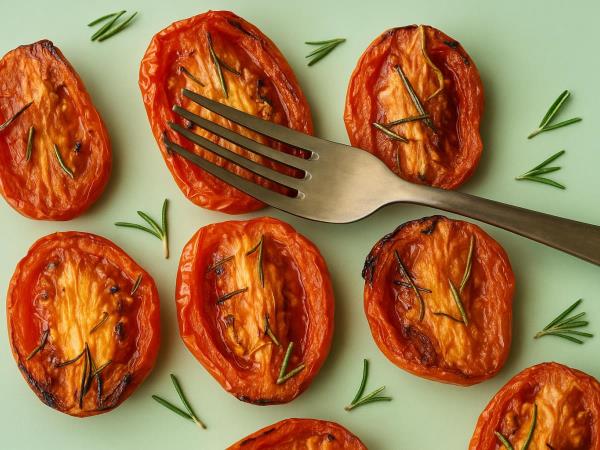
The best-known example is the tomato. Fresh tomatoes contain lycopene, the carotenoid responsible for their red color, which has been studied for its antioxidant properties (Tomato lycopene and its role in human health, CMAJ). In raw tomatoes, however, lycopene is tightly bound within the plant's cell walls. Heating breaks down this rigid matrix, and the compound becomes considerably easier for the body to absorb — particularly when paired with a source of fat, since lycopene is fat-soluble (Tomato-Derived Lycopene: Bioavailability and Applications, Molecules/MDPI). This is one reason tomato sauce, paste, and soup are often cited in nutrition research as more concentrated lycopene sources than a fresh tomato slice.
Worth noting: current evidence around lycopene and disease prevention is still developing, and no food should be treated as a substitute for medical care or a balanced diet.
Eggs: Why a Hard-Boiled Egg Beats a Raw One for Biotin
Biotin (vitamin B7) is essential for normal energy metabolism, and eggs are one of its richest natural sources. But in a raw egg, biotin is bound to a protein called avidin, found in the egg white, which strongly resists digestion and blocks biotin absorption almost entirely (Biotin: Fact Sheet for Health Professionals, NIH Office of Dietary Supplements).
Cooking denatures avidin, effectively switching it off, which is why a fully cooked egg makes considerably more biotin available than a raw one (Biotin, Linus Pauling Institute, Oregon State University). Pairing a hard-boiled egg with a small amount of olive oil and cooked carrots may further support absorption, since several micronutrients in this combination are fat-soluble and benefit from being eaten alongside dietary fat.
Cruciferous Vegetables and Carrots: The Same Pattern Shows Up Again
Cauliflower, cabbage, Brussels sprouts, and broccoli follow a similar logic. Research summarized by Tufts University's Friedman School of Nutrition Science has found that a number of vegetables — including carrots, broccoli, cabbage, and asparagus — can supply more carotenoids to the body when cooked than when eaten raw (The Benefits of Raw Versus Cooked Vegetables, Tufts Now). Adding a small amount of oil tends to improve the effect further, since it helps the body package these compounds for absorption.
Carrots are a particularly well-studied example. A controlled study found that significantly more beta-carotene was absorbed from cooked, pureed carrots than from raw, chopped ones (Beta-carotene bioavailability from differently processed carrot meals, PubMed), and other research has shown that cooking carrots with a bit of oil can substantially increase how much beta-carotene the body is able to use.
So, Is Raw Ever the Better Choice?
Not always — and not never. Raw vegetables tend to retain more vitamin C and certain heat-sensitive B vitamins, along with more of their natural fiber structure. The takeaway isn't "cooked is superior" or "raw is outdated" — it's that different foods, and different nutrients within the same food, respond differently to heat. A varied plate that includes both raw and cooked vegetables, along with a modest amount of healthy fat, is generally a reasonable way to cover more nutritional bases.
If you've been leaning toward a fully raw or strictly plant-based way of eating for nutritional reasons, this may be worth factoring in — not as a reason to abandon the approach, but as one more piece of information to weigh alongside your own goals and, ideally, a conversation with a qualified nutrition professional.
Information on this website is for educational purposes only and is not medical advice.
expert, nutritionist
 Would you like to be informed about news on the website?














|

