





Why Eating Smaller, More Frequent Meals Could Be the Real Secret to a Slimmer You — It's Not About Willpower, It's About Your Plate
expert, nutritionist
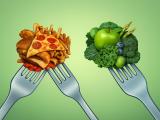
Trim your plate by about 30 percent and drink a glass of water half an hour before lunch — together, these two small habits are among the easiest ways researchers have found to help people eat less without feeling like they're starving themselves. No extreme diet, no forbidden foods, no willpower marathon. Just a smaller plate and a glass of water.
Actress Rebel Wilson, who has spoken openly about her own weight-loss journey, put it simply in an interview: if you eat right and you eat small portions you'll be just fine.
(Source: BuzzFeed) Her comment echoes something nutrition researchers have been circling for years: how much food lands on your plate may matter more than which foods you swear off entirely.
Does eating one big meal a day really pack on more weight?
There's a popular belief that people who eat just once or twice a day tend to gain more weight than those who nibble their way through the day, because constant digestion supposedly keeps the body's "engine" running, burning calories the way gentle exercise would. It's a tidy story — but the science is more nuanced than that.
Digesting food does raise your metabolism slightly (it's called the thermic effect of food), but research reviews suggest what mostly matters is the total amount you eat over the day, not how many times you sit down to eat it. A widely cited overview of meal-frequency studies found no consistent difference in daily calorie burn between eating three larger meals or six smaller ones (summary of the research here).
Where meal timing does seem to matter more clearly is skipping meals altogether. Foodwhisper has previously written about how skipping breakfast tends to backfire by the afternoon, when hunger catches up and people often end up eating more than they would have otherwise. Similarly, in a piece on why weight-loss diets commonly fail, one of the recurring themes is under-eating earlier in the day and then overcompensating later — not the number of meals itself, but the pattern of restriction followed by a rebound.
So the safest takeaway isn't "eat six times a day or you'll gain weight" — it's that skipping meals to save calories tends to set you up for a hungrier, harder-to-control evening.
The fruit and vegetable gap is real — and it's bigger in men
Across the EU, eating habits still fall well short of the World Health Organization's five-a-day recommendation. According to Eurostat's nutritional habits data, only around 12–14% of EU adults reach five portions of fruit and vegetables a day, and there's a clear gender gap: roughly 57% of women eat vegetables at least once a day, compared with about 44% of men. Fruit shows a similar pattern, with women consistently outpacing men across nearly every EU member state.
At the same time, fewer people seem to keep up the habit of a proper mid-morning or mid-afternoon snack — and Foodwhisper has previously noted that many people now eat the bulk of their daily calories later in the day rather than earlier, which tends to work against steady energy levels and appetite control.
The 30 percent rule: the single change with the best evidence behind it
If there's one habit with genuinely strong research support, it's this: reducing portion sizes reliably reduces how much people eat. A large review of controlled trials — the Cochrane review on portion, package and tableware size — found a consistent effect of smaller portions on food and calorie intake (Hollands et al., Cochrane Database of Systematic Reviews). A more recent meta-analysis of downsizing studies found that smaller served portions were linked to meaningfully lower daily energy intake, with bigger cuts producing bigger reductions, though the effect levels off once portions are already small (full study summary).
The practical version of this: you don't need to eliminate entire food groups or count every calorie. Simply serving yourself around 30% less than your usual portion — while keeping a normal amount of daily movement, such as at least 30 minutes of walking — is one of the better-supported everyday habits for gradual weight management.
The water-before-lunch trick — what the research actually shows
The advice to drink a glass of water before eating isn't just folk wisdom. In a randomized trial by researchers at Virginia Tech, middle-aged and older adults who drank about two cups of water half an hour before meals ate noticeably less during the meal and lost more weight over 12 weeks than a comparison group on the same diet (Harvard Health's summary of the evidence). A separate controlled study found that a water preload immediately before a meal reduced how much food participants voluntarily ate afterward (study on PubMed).
The likely mechanism is straightforward: your stomach has stretch receptors that signal the brain when it's filling up. A comfortably full adult stomach typically holds somewhere around 1 to 1.5 liters, and pre-filling part of that space with water appears to bring on that "I've had enough" signal sooner — meaning you may naturally serve yourself, and finish, less.
For people who want a little more flavor than plain water, Foodwhisper has also looked at pepper-infused water as a pre-meal habit, and at satiety-friendly ingredients like legumes, which digest slowly and may help curb the mid-afternoon hunger crash.
A quick word of caution on "water weight"
One thing worth keeping in mind if you step on the scale after a few days of smaller portions and more water: a fast initial drop is very often water, not fat. Foodwhisper has previously explained how to tell the difference between losing water and losing fat — useful context before getting discouraged, or over-excited, by the first few days of a new habit.
The bottom line
None of this requires a dramatic overhaul. Based on the current evidence, the habits with the best track record are refreshingly modest: trim portions by around a third, drink a glass of water before your main meals, don't skip breakfast to "save" calories, and keep up at least half an hour of walking most days. It's less about heroic willpower and more about a few small, repeatable adjustments — the kind that are far easier to stick with long-term than a strict diet.
Information on this website is for educational purposes only and is not medical advice.
expert, nutritionist
 Would you like to be informed about news on the website?











|

