




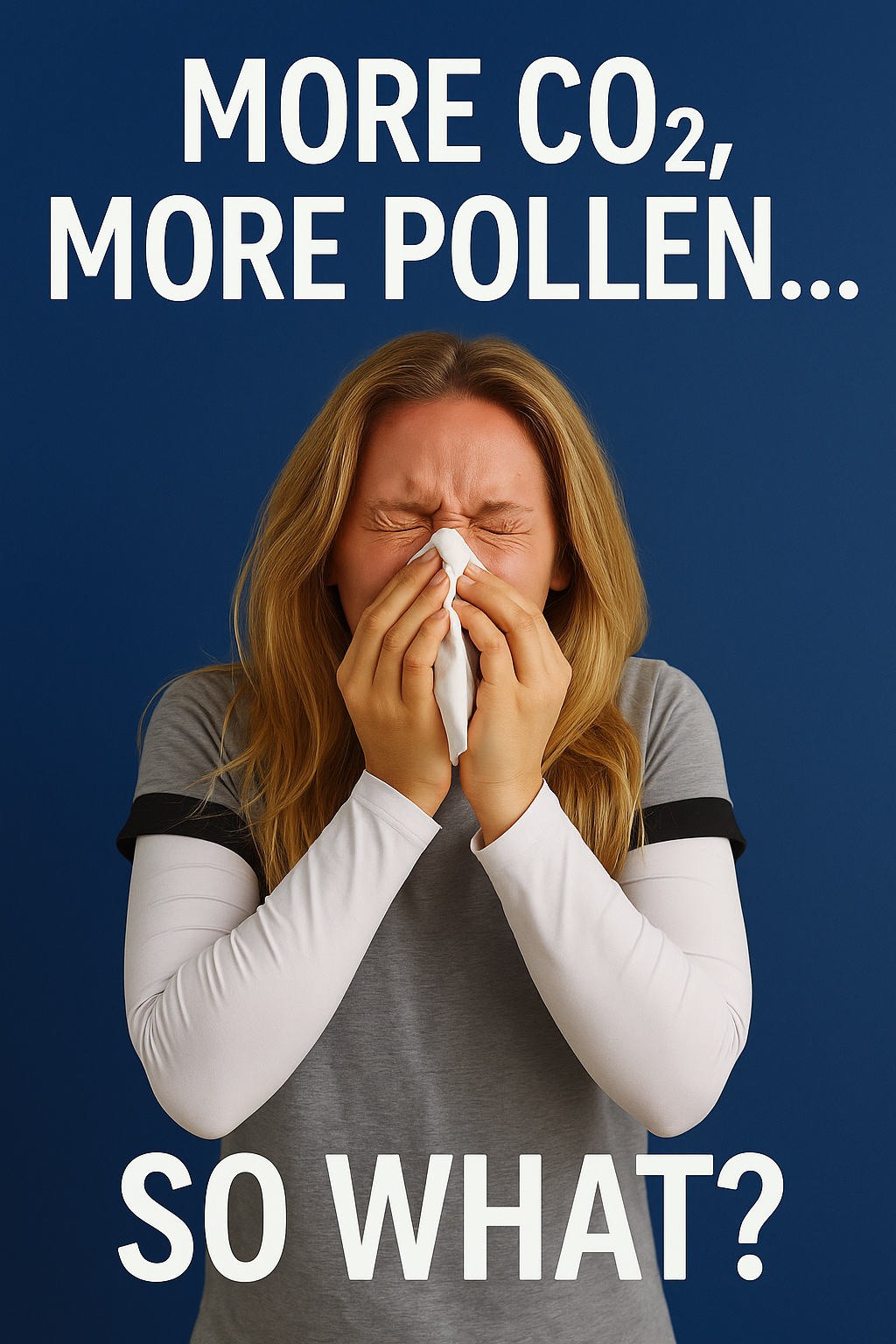

More CO2, More Pollen ... So What?
expert, nutritionist
Do you find your nose is itchier, your eyes water more, or that strange "spring fatigue" lingers longer than it used to? You're not imagining it — and the reasons may go well beyond dust in the air or a personal sensitivity.
A reader from our community once wrote to us describing how her seasonal sniffles, once a mild two-week nuisance every April, had stretched into a two-month ordeal by her thirties — despite living in the same house, with the same garden, for over a decade. She isn't alone. Allergists across Europe report similar stories, and researchers increasingly think the changing climate itself may be part of the explanation.
What's actually happening to plants?
One of the more striking pieces of evidence comes from a Harvard University experiment. Researchers led by Peter Wayne, working with Dr. Paul Epstein — later founder of Harvard's Center for Health and the Global Environment — grew ragweed plants in two sealed greenhouse environments with different CO2 concentrations.
One chamber held CO2 at roughly 350 parts per million (close to atmospheric levels around 1980). The other was set to 700 ppm, roughly double — a level some climate projections suggest could be reached later this century.
The result, published in Annals of Allergy, Asthma & Immunology, was striking: pollen production in the high-CO2 chamber was 61% higher. It's worth noting this study focused specifically on ragweed, a notoriously potent allergen — but it's one of several experiments pointing in the same direction for other allergenic plants too.
What this could mean for you
Pollen is far from harmless dust. For sensitized individuals, it's one of the most common natural triggers of an overactive immune response. Typical symptoms include a blocked nose, itchy eyes, fatigue, and — for some — breathing difficulties. Over time, this can develop into allergic rhinitis, and in more severe cases contribute to asthma.
According to the World Health Organization, allergic rhinitis already affects around 400 million people worldwide, with Europe among the hardest-hit regions. Some researchers project this number could rise substantially by mid-century as pollen seasons lengthen and intensify.
What does traditional folk wisdom offer?
Long before antihistamines existed, people turned to what grew around them. Nettle is one of the best-known examples — it's traditionally used for its mild antihistamine-like properties. If you'd like to try it, a nettle tea made from fresh or dried leaves during flowering season (roughly March through June) is a simple starting point; keep it on the milder side, as nettle is a potent plant. You can read more about its traditional uses for allergies and other conditions in this Foodwhisper article on nettle.
Local honey is another folk favorite, often discussed as a way to help the body gradually adjust to local pollen exposure. It's worth being upfront here: the scientific evidence for this specific effect is thin and mixed. That said, honey does bring genuine nutritional value — antioxidants, enzymes, trace vitamins — so there's little downside to including it as part of a varied diet, as long as you're not allergic to bee products yourself. If you're also managing pollen-related food sensitivities, it's worth knowing that certain fruits (like pears) can trigger cross-reactions in people with birch pollen allergies — we cover this in our article on pears and digestive health.
Integrative-medicine physicians, including figures like Dr. Andrew Weil, have long pointed to a combination of vitamin C, omega-3 fatty acids (from flaxseed or fish), and probiotics as general support for a balanced immune response. On probiotics specifically, the evidence is more concrete than folk remedies: a 2022 systematic review and meta-analysis in Frontiers in Immunology, covering 28 studies, found that probiotic supplementation was associated with a modest but statistically significant improvement in allergic rhinitis symptom scores — though the researchers also noted high variability between studies, meaning results aren't guaranteed for everyone.
What can you do right now?
Feeling at the mercy of pollen season doesn't mean you're powerless. A few practical, low-effort habits can meaningfully cut your exposure. Pollen counts tend to peak from March through late June, with grasses among the biggest offenders — though climate shifts appear to be nudging these "bloom windows" around in ways researchers don't yet fully understand.
- Air out your home early morning or late evening, when pollen concentration in the air is typically lower
- Dry laundry indoors during high-pollen weeks rather than outside
- Rinse your face and hair after spending time outdoors
- Consider nasal filters, or simply limit time outside on high-pollen-count days
The bigger picture
Climate change isn't just a story about melting ice caps far away — for allergy sufferers, it's already showing up in daily life. Some studies suggest pollen seasons have lengthened by an average of around 20 days in parts of the Northern Hemisphere over recent decades, alongside a rise in overall pollen concentrations — trends researchers link partly to warming temperatures and rising CO2. The practical result: more allergy flare-ups, more visits to the doctor, and a real dent in quality of life for millions of people.
It's part of why a growing number of physicians frame long-term respiratory health as tied to the health of the planet more broadly. None of this is cause for alarm — but it is a reasonable nudge to pay a little more attention during pollen season.
In closing
As the seasons shift in ways our grandparents might not recognize, there's real value in revisiting some of the simple, tested remedies — herbal teas, whole foods, small daily habits — alongside the bigger-picture choices: supporting cleaner air, more green space, and lower emissions where we can.
What we breathe today is more than just air. It's a reflection of the environment we're all shaping together.
Information on this website is for educational purposes only and is not medical advice.
expert, nutritionist
 Would you like to be informed about news on the website?










|

