







Date: 06/26/2026 - GOOD TO KNOW
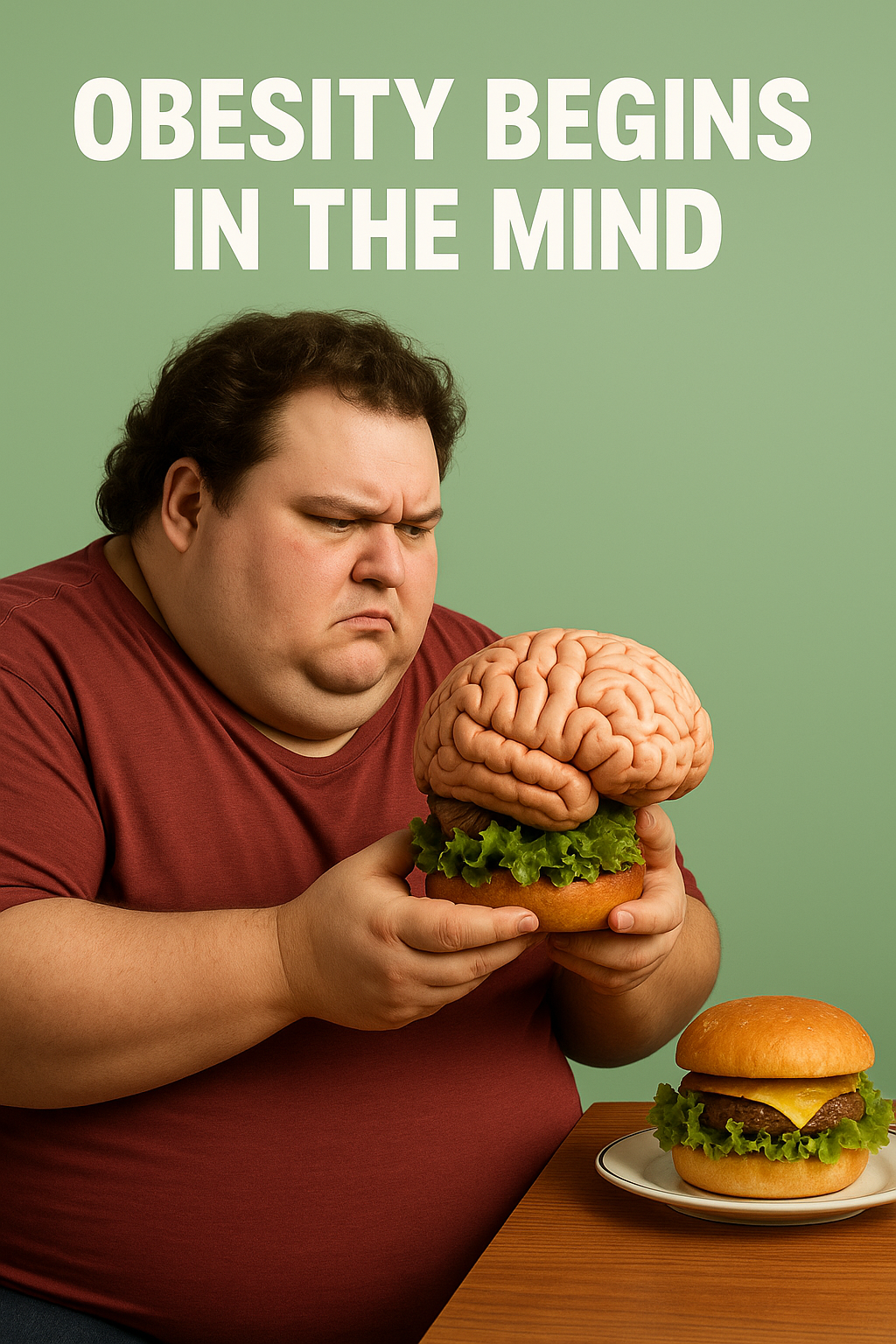
Obesity Begins in the Mind
AUTHOR:
Zvone Stor
expert, nutritionist
expert, nutritionist
Have you ever wondered why some people are constantly thinking about food, while others almost forget to eat?
Why can some eat a piece of pie and stop, while others can’t stop until the plate is empty? Let us reassure you – you are not alone, and it’s not all your fault. More and more research shows that obesity doesn’t just begin on the plate, but in our brains. Yes, you read that right – in the brain!
When Insulin Loses Its Compass
Let’s start with a hormone called insulin. Its name is mostly familiar to people with diabetes, but in reality, it’s important for all of us. Insulin helps the body to store the sugar we eat in our cells. That’s how we get energy. If the body stops responding to insulin properly – which is called insulin resistance – sugar starts to accumulate in the blood, we start to gain weight, feel tired, and slowly a vicious circle of problems begins.
Experts at the clinic in German Tuebingen found that even just a few days of indulging in processed food significantly affects brain function. To clarify – processed food is anything that comes from boxes, bags, plastic: chips, sausages, ready-made meals, cookies, drinks with artificial sweeteners... In other words, anything with more than five ingredients, most of which are not really food.
The researchers divided 29 healthy men into two groups. One ate normally, while the other, in addition to regular meals, consumed an extra 1500 calories per day of processed food. That’s about one large Big Mac meal with a sugary drink every day. Five days in a row.
The result? After just those few days, the brains of these people started losing sensitivity to insulin. And this is no joke. Under normal circumstances, insulin in the brain helps suppress hunger. This means the brain detects we are full and we stop eating. But if the brain no longer detects this signal properly, this doesn’t happen. And we keep eating, even if we’re already full.
Why this matters to you too
Sometimes we hear: Just eat less and move more! But it’s not always that simple. If your brain can no longer detect satiety, you are trapped in a physical struggle that’s very hard to win. And the most frightening part of this study is that these changes in the brain lasted even a week after the participants returned to healthy eating.
This means that every adventure into dietary “wilderness” leaves a mark. Not just on the scale, but in the brain. What’s worse – similar phenomena were only known to occur in people who had already been overweight for a long time. Now we know that brain mechanisms can start failing after just a few days of poor diet.
Statistics That Open Eyes
According to data from the World Health Organization, there are already more than 1 billion people worldwide who are overweight, among them 650 million obese. This is no longer a personal problem, it’s a global crisis. In Europe, OECD (Organization for Economic Cooperation and Development) data show that as many as 60% of adults are overweight, and in some countries, such as Hungary, Turkey, and the UK, numbers exceed 70%.
In Slovenia, according to NIJZ (National Institute of Public Health), almost 58% of adults are overweight, with 20% of men and 17% of women already obese (BMI over 30).
BMI, by the way, means body mass index. You calculate it by dividing your body weight in kilograms by the square of your height in meters. For example: if you weigh 80 kg and are 1.75 m tall, your BMI is 80 / (1.752) = 26.1. Which means – already very close to the threshold for obesity.
Folk Medicine Has Known This for a Long Time
The elders used to say: Obesity comes through the mouth but stays in the mind. Today, science confirms this. In folk practices, people have known for centuries about plants and habits that helped the body to cleanse itself and find balance.
For example, stinging nettle, which stimulates the liver and kidneys – the body’s main purifiers. Or dandelion root, which has the power to invigorate digestion and cleanse the blood. These plants aren’t just folklore – modern studies confirm their effects. Dandelion extract, for example, according to a 2018 study (published in the journal Nutrition Research), can reduce body fat in people with metabolic syndrome.
Bitter herbs from wormwood, gentian, and yarrow** were considered “digestive alarms” in folk medicine. If digestion works well, body weight is easier to manage. However, this isn’t a solution if we don’t understand that the brain plays the main role.
What does this mean for you?
It’s no longer just about what you eat. It’s about what your brain perceives as hunger, and how it responds to sugar, fat, processed foods. Insulin, which is supposed to maintain balance, becomes a “blind guide” in the wrong circumstances. If the brain no longer follows it, we lose our compass – and not just in diet, but also in mood, memory, and motivation.
This brings us to another important point: poor insulin sensitivity in the brain is also linked to a higher likelihood of dementia, Alzheimer’s, and depression. In the US, researchers at Johns Hopkins University found that people with insulin resistance have a 40% higher risk of developing dementia in later years. So insulin doesn’t just affect the pancreas and blood sugar, but also memory, mood, and decision-making ability.
What you can do today
The cure isn’t in pills, but in everyday habits. Make sure your meals are simple, fresh, full of fiber, vegetables, healthy fats, and natural flavors. Avoid “ready-made” meals as they don’t satisfy you – they only confuse your brain. Each meal should be an event, not a rush. And if you can, occasionally include homemade teas from nettle, dandelion, or yarrow, which help with body balance.
Physical activity is essential, not because of calories, but because it improves brain function. A daily 30-minute walk can increase the brain’s sensitivity to insulin by over 20%, according to research by the American Diabetes Association.
And finally – sleep well. Poor sleep confuses hunger and satiety hormones. After just one night of too little sleep, the level of the hormone ghrelin (the hunger hormone) rises, while leptin (the satiety hormone) falls. This is a biochemical disaster. No wonder we attack the fridge in the morning.
Let’s conclude with this thought: obesity doesn’t start on the scale, but in the mind. And that’s where the solution must begin.
Information on this website is for educational purposes only and is not medical advice.
When Insulin Loses Its Compass
Let’s start with a hormone called insulin. Its name is mostly familiar to people with diabetes, but in reality, it’s important for all of us. Insulin helps the body to store the sugar we eat in our cells. That’s how we get energy. If the body stops responding to insulin properly – which is called insulin resistance – sugar starts to accumulate in the blood, we start to gain weight, feel tired, and slowly a vicious circle of problems begins.
Experts at the clinic in German Tuebingen found that even just a few days of indulging in processed food significantly affects brain function. To clarify – processed food is anything that comes from boxes, bags, plastic: chips, sausages, ready-made meals, cookies, drinks with artificial sweeteners... In other words, anything with more than five ingredients, most of which are not really food.
The researchers divided 29 healthy men into two groups. One ate normally, while the other, in addition to regular meals, consumed an extra 1500 calories per day of processed food. That’s about one large Big Mac meal with a sugary drink every day. Five days in a row.
The result? After just those few days, the brains of these people started losing sensitivity to insulin. And this is no joke. Under normal circumstances, insulin in the brain helps suppress hunger. This means the brain detects we are full and we stop eating. But if the brain no longer detects this signal properly, this doesn’t happen. And we keep eating, even if we’re already full.
Why this matters to you too
Sometimes we hear: Just eat less and move more! But it’s not always that simple. If your brain can no longer detect satiety, you are trapped in a physical struggle that’s very hard to win. And the most frightening part of this study is that these changes in the brain lasted even a week after the participants returned to healthy eating.
This means that every adventure into dietary “wilderness” leaves a mark. Not just on the scale, but in the brain. What’s worse – similar phenomena were only known to occur in people who had already been overweight for a long time. Now we know that brain mechanisms can start failing after just a few days of poor diet.
Statistics That Open Eyes
According to data from the World Health Organization, there are already more than 1 billion people worldwide who are overweight, among them 650 million obese. This is no longer a personal problem, it’s a global crisis. In Europe, OECD (Organization for Economic Cooperation and Development) data show that as many as 60% of adults are overweight, and in some countries, such as Hungary, Turkey, and the UK, numbers exceed 70%.
In Slovenia, according to NIJZ (National Institute of Public Health), almost 58% of adults are overweight, with 20% of men and 17% of women already obese (BMI over 30).
BMI, by the way, means body mass index. You calculate it by dividing your body weight in kilograms by the square of your height in meters. For example: if you weigh 80 kg and are 1.75 m tall, your BMI is 80 / (1.752) = 26.1. Which means – already very close to the threshold for obesity.
Folk Medicine Has Known This for a Long Time
The elders used to say: Obesity comes through the mouth but stays in the mind. Today, science confirms this. In folk practices, people have known for centuries about plants and habits that helped the body to cleanse itself and find balance.
For example, stinging nettle, which stimulates the liver and kidneys – the body’s main purifiers. Or dandelion root, which has the power to invigorate digestion and cleanse the blood. These plants aren’t just folklore – modern studies confirm their effects. Dandelion extract, for example, according to a 2018 study (published in the journal Nutrition Research), can reduce body fat in people with metabolic syndrome.
Bitter herbs from wormwood, gentian, and yarrow** were considered “digestive alarms” in folk medicine. If digestion works well, body weight is easier to manage. However, this isn’t a solution if we don’t understand that the brain plays the main role.
What does this mean for you?
It’s no longer just about what you eat. It’s about what your brain perceives as hunger, and how it responds to sugar, fat, processed foods. Insulin, which is supposed to maintain balance, becomes a “blind guide” in the wrong circumstances. If the brain no longer follows it, we lose our compass – and not just in diet, but also in mood, memory, and motivation.
This brings us to another important point: poor insulin sensitivity in the brain is also linked to a higher likelihood of dementia, Alzheimer’s, and depression. In the US, researchers at Johns Hopkins University found that people with insulin resistance have a 40% higher risk of developing dementia in later years. So insulin doesn’t just affect the pancreas and blood sugar, but also memory, mood, and decision-making ability.
What you can do today
The cure isn’t in pills, but in everyday habits. Make sure your meals are simple, fresh, full of fiber, vegetables, healthy fats, and natural flavors. Avoid “ready-made” meals as they don’t satisfy you – they only confuse your brain. Each meal should be an event, not a rush. And if you can, occasionally include homemade teas from nettle, dandelion, or yarrow, which help with body balance.
Physical activity is essential, not because of calories, but because it improves brain function. A daily 30-minute walk can increase the brain’s sensitivity to insulin by over 20%, according to research by the American Diabetes Association.
And finally – sleep well. Poor sleep confuses hunger and satiety hormones. After just one night of too little sleep, the level of the hormone ghrelin (the hunger hormone) rises, while leptin (the satiety hormone) falls. This is a biochemical disaster. No wonder we attack the fridge in the morning.
Let’s conclude with this thought: obesity doesn’t start on the scale, but in the mind. And that’s where the solution must begin.
Information on this website is for educational purposes only and is not medical advice.
Author:
Zvone Stor
expert, nutritionist
expert, nutritionist
 Would you like to be informed about news on the website?
Just enter your e-mail
Obesity and the Brain
Insulin Resistance and Obesity
Effects of Processed Food on the Brain
Obesity Statistics Worldwide
Natural Remedies for Obesity
Latest news





Four Ingredients Every Kitchen Already Has: The Morning Drink Healthy-Living Fans Swear By
Read more >>







After 40, the Pounds Don't Just Appear – Your Body Is Sending You a Message Most Women Misread
Read more >>

The Humble Bean That Takes On Cholesterol: Why Legumes Are Not Just Peasant Food but a Friend to Your Heart
Read more >>

When a Kids' Drink Beats Sports Drinks: What Science Really Says About Chocolate Milk After Training
Read more >>

Interaktive Widgets:
|

