





Date: 05/18/2026 - GOOD TO KNOW
Foods Worth Limiting If You Want to Maintain a Sharp Mind
AUTHOR:
Zvone Stor
expert, nutritionist
expert, nutritionist
When it comes to dementia, today we are better able than ever before to connect food with the health of our brains. But do we actually take this into account?! Not really ...
Dementia is now one of the most alarming diagnoses of modern times. In the United States, for example, more than 7 million people live with it. According to The Alzheimer’s Association, this number is expected to rise to as many as 13 million by 2050. Women are somewhat more at risk than men, primarily due to the higher average age they reach.
Although we can’t influence all the causes – we can’t choose our genes – we can, with simple everyday decisions, reduce our risk. And nutrition plays a key role here.
What is dementia, anyway?
Dementia isn’t a single disease, but a group of symptoms linked to declining brain function, such as memory, thinking, orientation, understanding, calculation, language learning, and judgment. Simply put: it’s a condition where the brain slowly but steadily shuts down. People affected by it become forgetful, confused, have trouble communicating, or simply are no longer the same.
Among the most common forms of dementia is Alzheimer’s disease, where abnormal protein aggregates (called amyloid plaques and tau tangles) accumulate in the brain, disrupting normal brain cell function. Another common cause is Parkinson’s disease, which involves the degeneration of a specific brain region responsible for movement and coordination, often also affecting memory and mood.
And what causes these changes? There are many factors, but among the most powerful are those we can influence every day – including diet, physical activity, sleep, and stress.
What does modern science say about food and dementia?
What can you do starting today?
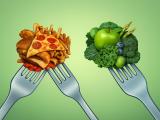
Fortunately, it’s not all bad. Even if there’s a case of dementia in your family, you can make a huge difference with a few simple changes. The Mediterranean way of eating works best – plenty of vegetables, olive oil, fish, whole grains, and few processed foods.
Interestingly, a study conducted in Greece showed that older individuals who most consistently followed the Mediterranean diet were 53% less likely to develop Alzheimer’s disease compared to those who ate a modern Western diet.
Add regular exercise, quality sleep, and limit stress – and you’ll do more than any pill ever could. As old healers used to say: be good to your body, and your body will be good to you.
Information on this website is for educational purposes only and is not medical advice.
Although we can’t influence all the causes – we can’t choose our genes – we can, with simple everyday decisions, reduce our risk. And nutrition plays a key role here.
What is dementia, anyway?
Dementia isn’t a single disease, but a group of symptoms linked to declining brain function, such as memory, thinking, orientation, understanding, calculation, language learning, and judgment. Simply put: it’s a condition where the brain slowly but steadily shuts down. People affected by it become forgetful, confused, have trouble communicating, or simply are no longer the same.
Among the most common forms of dementia is Alzheimer’s disease, where abnormal protein aggregates (called amyloid plaques and tau tangles) accumulate in the brain, disrupting normal brain cell function. Another common cause is Parkinson’s disease, which involves the degeneration of a specific brain region responsible for movement and coordination, often also affecting memory and mood.
And what causes these changes? There are many factors, but among the most powerful are those we can influence every day – including diet, physical activity, sleep, and stress.
What does modern science say about food and dementia?
- Red Meat – Friend or Foe?
You probably still remember how our grandmothers used to cook beef soup on Sundays, blood sausages in winter, and homemade roasts. But today’s meat, full of antibiotics and processed ingredients, is no longer the same as it once was.
A 2021 study published in the prestigious American Journal of Clinical Nutrition highlighted an interesting paradox: processed meats like hot dogs, salamis, sausages, and p{-15454}t{-15447}s can increase the risk of developing dementia by as much as 44%. On the other hand, unprocessed red meat (such as fresh beef or lamb) had no negative effect – some researchers even observed a slight protective effect.
Scientists believe the main problems are trans fats and saturated fats, which damage the blood-brain barrier – a natural barrier that protects our brain from harmful substances in the blood. If this barrier is compromised, toxins can enter the brain, causing inflammation and damage. - Alcohol – The Silent Enemy of Memory
When talking about alcohol, it’s important to note that not every sip is problematic. The issue arises when alcohol becomes a regular presence. The UK Alzheimer’s Society notes that over 10% of all dementia cases are directly linked to excessive alcohol consumption.
It’s not just about destroying brain cells, but also about a lack of thiamine (vitamin B1), which alcohol quickly depletes from the body. Without thiamine, communication between brain cells is disrupted, which can lead to permanent memory impairment.
The limit scientists often mention is five large glasses of wine per week. Regularly exceeding this greatly increases the risk of cognitive decline. An occasional glass of red wine does contain resveratrol, an antioxidant that protects the brain, but let this be the exception, not the rule. - Refined Grains – Empty Food for Empty Brains
A croissant in the morning, white bread at lunch, cookies in the afternoon. Sound familiar? Unfortunately, this is a common reality, and it comes at a high cost.
A study published in Alzheimer’s & Dementia showed that people who frequently consume refined grains (those from which most fiber, vitamins, and minerals have been removed) are more prone to inflammation and insulin resistance. Both factors are strongly linked to dementia.
In one of the largest research projects conducted in China, involving more than 70,000 people, researchers found that a diet high in white pasta, white bread, and pastries was associated with a 40% higher risk of cognitive decline compared to a diet rich in whole grains. - Sugar – The Hidden Culprit Number One?
A few spoonfuls of sugar in coffee, some honey on bread, maybe a flavored yogurt and some juice. Altogether, this quickly adds up to more than 100 grams of sugar per day, which is almost twice the recommended amount of about 50 grams per day for adults.
A top study published in the New England Journal of Medicine found that people with higher blood sugar also have a higher risk of dementia – regardless of whether they have diabetes or not.
Sugar causes inflammation, brain shrinkage, and damages the capillaries that supply blood to the brain. This is a so-called small vessel disease, which leads to reduced oxygen supply to the brain – meaning that, in the long term, the brain struggles to function.
Some researchers believe that sugar is especially dangerous because of insulin resistance, which can disrupt hormonal and chemical balance in the brain.
What can you do starting today?
Fortunately, it’s not all bad. Even if there’s a case of dementia in your family, you can make a huge difference with a few simple changes. The Mediterranean way of eating works best – plenty of vegetables, olive oil, fish, whole grains, and few processed foods.
Interestingly, a study conducted in Greece showed that older individuals who most consistently followed the Mediterranean diet were 53% less likely to develop Alzheimer’s disease compared to those who ate a modern Western diet.
Add regular exercise, quality sleep, and limit stress – and you’ll do more than any pill ever could. As old healers used to say: be good to your body, and your body will be good to you.
Information on this website is for educational purposes only and is not medical advice.
Author:
Zvone Stor
expert, nutritionist
expert, nutritionist
 Would you like to be informed about news on the website?
Just enter your e-mail
Dementia prevention
Food and brain health
Red meat and dementia
Alcohol and memory
Mediterranean diet dementia
Latest news





Four Ingredients Every Kitchen Already Has: The Morning Drink Healthy-Living Fans Swear By
Read more >>





After 40, the Pounds Don't Just Appear – Your Body Is Sending You a Message Most Women Misread
Read more >>

The Humble Bean That Takes On Cholesterol: Why Legumes Are Not Just Peasant Food but a Friend to Your Heart
Read more >>

When a Kids' Drink Beats Sports Drinks: What Science Really Says About Chocolate Milk After Training
Read more >>

Interaktive Widgets:
|

