




Date: 05/09/2026 - GOOD TO KNOW
3 combinations that do more harm than good
AUTHOR:
Zvone Stor
expert, nutritionist
expert, nutritionist
People often say: If something is natural, then it can’t be harmful... But even natural ingredients, if improperly combined, can lose their healing effect...
We present to you 3 very common combinations that many people consume almost every day, but actually have a very negative impact on our bodies. Not because any of these foods are bad by themselves, but because together they create confusion in our digestive system and inhibit each other’s beneficial effects.
Health is not in dieting, but in smart combinations
Our body is like an old, but well-oiled farmhouse clock – if you pour dust and sand into it, it will eventually break down. But if you maintain it properly, it will tick for many more years. The same applies to our body. Food is not an enemy, but medicine – but only if we know how to use it properly.
So next time you prepare tea, skip the milk. Rather, spread butter instead of jam on your bread. And salad – pour over a spoonful of good homemade oil, not artificial diet dressings.
If you want to know more about which combinations are really good for the body and soul, we invite you to regularly follow the Foodwhisper.com portal. There you’ll find homegrown solutions, backed by research, written in a language we can all understand.
Information on this website is for educational purposes only and is not medical advice.
- Tea and milk – opposites that do not attract
You’ve probably ordered tea with milk in a caf{-15447} at some point. The English have been doing this for centuries, and many might think: “If the whole of Great Britain does it, it can’t be wrong.” But science says otherwise.
Teas, especially black and green, are naturally full of antioxidants – these are substances that capture harmful molecules in the body called free radicals. These molecules form when we’re stressed, inhale polluted air, or eat an unhealthy diet. Antioxidants from tea help reduce inflammation in the body and strengthen our immune system.
But beware: If you add milk to your tea, whether it’s cow’s milk or a plant-based alternative like soy or almond milk, something unusual happens. The proteins from milk bind to antioxidants and prevent our body from utilizing them at all. This has been confirmed by scientists at the German university Charite, who found that adding milk significantly decreases the healing effect of flavonoids – a group of antioxidants most abundant in tea.
Moreover, tea contains caffeine, which isn’t a big problem if consumed in moderation, but it interferes with the absorption of calcium that you would otherwise get from milk. So – neither the milk delivers its benefits, nor does the tea retain its properties. A double loss.
If you’d like to jazz up your tea a bit, we recommend squeezing in a drop of lemon – that way, you not only improve taste, but also increase the absorption of some nutrients from tea, since vitamin C helps the body utilize more antioxidants.
Fun fact: According to a study by the UK’s Tea Advisory Panel, as many as 42% of Brits drink tea with milk. But research shows that these people get the least health benefits out of tea. - Bread and jam – a sugar bomb for breakfast
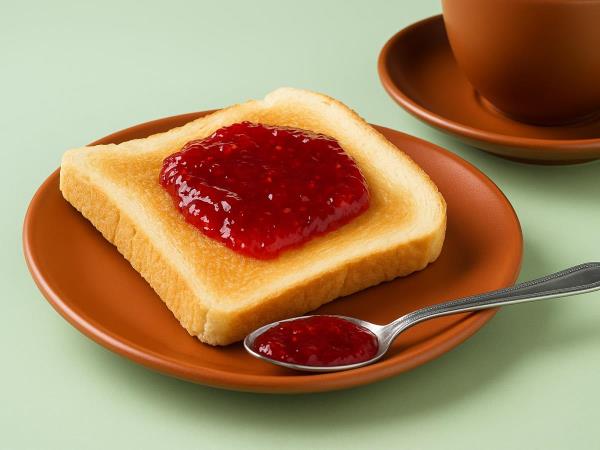
A breakfast that often seems harmless – a slice of white bread and a spoon of homemade jam – can actually be a recipe for afternoon fatigue, hunger, and long-term problems with blood sugar.
Let’s start with bread. Most people still choose white bread, which has a very high glycemic index – this means it very quickly turns into sugar in the blood. If you add jam to that, which is practically pure sugar (on average, 100 grams of jam contains about 65 to 70 grams of sugar!), then you’re sending a big load of glucose into your body all at once.
This causes a rapid rise in blood sugar; the pancreas needs to produce insulin quickly to get this sugar into the cells. But since there’s too much sugar, the body can’t use all that energy and stores it as fat.
But the story doesn’t end here. When insulin does its job, blood sugar quickly drops, causing that well-known energy dip when we become tired, hungry, irritable. In the long term, this overloading of the pancreas can also lead to insulin resistance, a precursor to type 2 diabetes.
Now you might think – should I swap white bread for wholegrain? Even this solution isn’t perfect. A study published in the renowned The American Journal of Clinical Nutrition showed that even wholegrain bread has a fairly high glycemic index (between 65 and 70), only slightly lower than white bread.
So what to do? The answer is not in a sweet spread, but in healthy fats. If you spread some homemade butter on bread, which contains vitamins A, D, and E, and healthy fats, the release of sugar into the blood slows down, meaning more stable energy. Moreover, several recent studies (e.g., a 2019 Harvard study) confirm that moderate consumption of saturated fats is not linked to cardiovascular diseases as was long believed.
Did you know that the average jam contains 3 to 5 sugar cubes per tablespoon? That’s nearly half the daily recommended amount of added sugar for an adult. - Salad without fat – vegetables that leave nothing behind
Trying to stay slim, many people decide to eat salad plain or with some diet dressing that’s supposedly fat-free. At first glance, this sounds reasonable – less fat, fewer calories. But here comes the paradox: without fat, you can’t get the nutrients from veggies!
Lettuce, carrots, peppers, tomatoes, and other colorful veggies contain carotenoids, vitamin K, vitamin E and other beneficial substances that are fat-soluble. That means our bodies can only absorb them if we eat them together with some fat.
A 2004 study published in American Journal of Clinical Nutrition clearly showed that carotenoids are barely absorbed if you eat salad without fat. But when subjects ate salad with a tablespoon of olive oil, absorption increased up to 15 times!
This means that if you really want to get something from your salad, you must add a tablespoon or two of good oil – olive, pumpkin seed, hemp, flaxseed – each has its own advantages. Olive, for example, contains oleic acid, which reduces inflammation and strengthens the heart. Pumpkin seed oil is full of zinc and omega 6 fats, while hemp oil has the ideal ratio of omega 3 to 6.
That way, you not only improve the taste, but also allow your body to benefit from all the goodness in vegetables. And don’t forget – fats don’t make you gain weight if they are natural and consumed in moderation. Excess sugar and processed foods are what make us gain weight.
Health is not in dieting, but in smart combinations
Our body is like an old, but well-oiled farmhouse clock – if you pour dust and sand into it, it will eventually break down. But if you maintain it properly, it will tick for many more years. The same applies to our body. Food is not an enemy, but medicine – but only if we know how to use it properly.
So next time you prepare tea, skip the milk. Rather, spread butter instead of jam on your bread. And salad – pour over a spoonful of good homemade oil, not artificial diet dressings.
If you want to know more about which combinations are really good for the body and soul, we invite you to regularly follow the Foodwhisper.com portal. There you’ll find homegrown solutions, backed by research, written in a language we can all understand.
Information on this website is for educational purposes only and is not medical advice.
Author:
Zvone Stor
expert, nutritionist
expert, nutritionist
 Would you like to be informed about news on the website?
Just enter your e-mail
Harmful food combinations
Tea and milk
Bread and jam
Salad with fat
Smart food combinations
Latest news



Four Ingredients Every Kitchen Already Has: The Morning Drink Healthy-Living Fans Swear By
Read more >>



After 40, the Pounds Don't Just Appear – Your Body Is Sending You a Message Most Women Misread
Read more >>

The Humble Bean That Takes On Cholesterol: Why Legumes Are Not Just Peasant Food but a Friend to Your Heart
Read more >>
When a Kids' Drink Beats Sports Drinks: What Science Really Says About Chocolate Milk After Training
Read more >>
Interaktive Widgets:
|

