




Date: 05/03/2026 - GOOD TO KNOW
Why didn’t our grandparents know about osteoporosis or cataracts?
AUTHOR:
Zvone Stor
expert, nutritionist
expert, nutritionist
When our great-grandmothers cooked minestrone, they didn’t weigh their broccoli, study calories, or know terms like phytonutrients or antioxidants. Yet, they ate healthier than most of us today.
If we told you there is a food that can keep you youthful, strengthen your bones, improve your eyesight, fill you with energy and protect you against cancer—and it’s not some miracle powder from the other side of the world, but something that grows right here in your backyard—would you believe it?
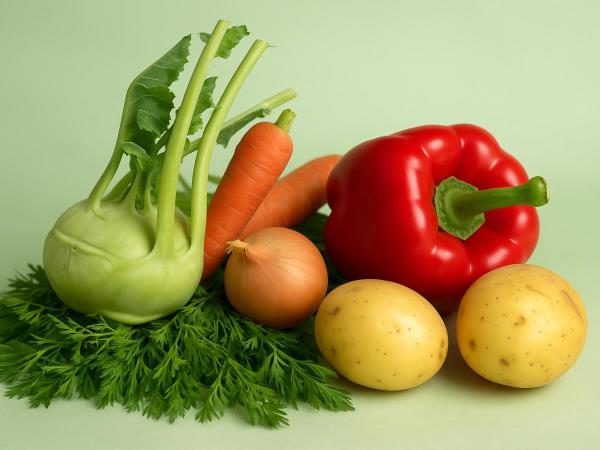
We’re talking about ordinary vegetables!
So let’s take a few moments and explore why our grandpas and grandmas didn’t urge us for nothing: Eat some more spinach, you’ll be as strong as Popeye!
No miracles, just vegetables
Vegetables aren’t a modern fad. They’re the wisdom of generations who knew that health must be built slowly, every day, with the fork, not with medicines. If you include more fresh, locally grown vegetables in your diet, you’ll do more for your health than anything else. No prescription, no contraindications, and no side effects— except maybe some bitterness on the tongue, which, as we’ve shown, often means precisely what the body needs most.
So be bold—go for kale, dandelion, broccoli, Swiss chard, or endive—and as our grandparents used to say: Where greens grow, health blossoms.
Information on this website is for educational purposes only and is not medical advice.
We’re talking about ordinary vegetables!
So let’s take a few moments and explore why our grandpas and grandmas didn’t urge us for nothing: Eat some more spinach, you’ll be as strong as Popeye!
- 1. Vegetables – a natural rejuvenation cure
One of the strongest natural guardians of youth is vitamin K. You’ve probably heard of it—it plays a crucial role in blood clotting in the body, but that’s far from its only function. A study published in the American Journal of Clinical Nutrition showed that sufficient intake of vitamin K helps slow aging processes—both externally and internally. We’re talking lower risks of cardiovascular diseases, bone fragility, and even arterial blockage, which is often the cause of heart attacks or strokes.
The most vitamin K-rich foods are green leafy vegetables—kale, Swiss chard, spinach, arugula, but also the less well-known pak choi and dandelion. One cup of fresh kale can provide 6 times the daily needed amount of vitamin K. The same goes for butternut squash—one cup contains 5 times the recommended daily allowance.
Interestingly, in traditional healing practices, herbalists often recommended eating wild plants—like dandelion and nettle—as they were believed to cleanse the blood and strengthen it. Today we know they were likely rich sources of vitamin K. - Cholesterol – the silent enemy that vegetables know how to tame
High cholesterol is now so widespread that, according to the WHO, as many as 39% of the world’s population have it above the normal range. That’s almost every second person! But here’s where kale comes into play—our ancestors used to say: Green bitterness softens the heart.
Here’s the thing: our liver uses cholesterol to make bile— that’s the bitter liquid that helps break down fats. When we eat vegetables full of fiber, the fiber binds to the bile acids, which are then excreted from the body. And because the body is left without these acids, it must prompt the liver to produce more—meaning more cholesterol is used up. The result? A natural reduction of bad cholesterol (LDL).
A 2014 Harvard University study confirmed that consuming cruciferous vegetables (these are plants like broccoli, cabbage, cauliflower, and kale) can lower cholesterol by up to 10% in four weeks, if included daily in your diet. - A green shield for your eyesight
An old saying goes: {-15685}He who eats greens will not see blindness.{-15701} And there’s more truth to that than you might think. Today we know of two key nutrients for eyesight: lutein and zeaxanthin. These are natural pigments (carotenoids) found in dark green vegetables. Their role could be described like this: they are like sunglasses for our eyes—they filter harmful blue light, protect the retina, and thus reduce the risk of cataracts and macular degeneration, which are the leading causes of blindness among the elderly.
According to the National Eye Institute, regular consumption of foods rich in lutein and zeaxanthin reduces the risk of vision impairment in seniors by more than 30%.
In traditional folk medicine, dandelion leaves, Swiss chard, nettle, and even raw kale are recommended for maintaining eyesight—most of these beneficial substances are preserved if the vegetables are eaten fresh or lightly steamed, not cooked. - More energy – without caffeine, without sugar
Do you feel tired by mid-morning, even though you slept all night? You might be lacking vitamin B5, also known as pantothenic acid. This is the substance that helps the body convert carbohydrates from food into glucose—our main fuel.
Just one cup of endive a day can meet your daily needs for this vitamin. Endive, which many know as ‘bitter lettuce,’ used to grace almost every home garden, but today it too often gets lost among plastic-packed salads from the store.
Pantothenic acid is water-soluble, which means the body cannot store it—so we need to get it fresh every day, ideally from fresh vegetables. And when you don’t get enough, it can show up as exhaustion, insomnia, irritability, or even loss of appetite. - Healthy bones even without milk
Most people think that strong bones require mainly dairy products, but a 2020 study in the American Journal of Clinical Nutrition showed that green vegetables can actually play a crucial role in strengthening bones. Why? Because they contain not only calcium, but also magnesium and vitamin K, which together act as a natural building material for bones.
For example, a cup of broccoli contains about 43 mg of calcium, while Swiss chard contains even more—about 100 mg. For comparison: an adult needs about 1000 mg of calcium per day; while you won’t meet the whole amount with vegetables, you can get up to a quarter of your needs if you eat vegetables regularly.
And you know what’s interesting? In folk medicine, elderly women recommended broccoli and bone broth for joint or movement problems. Now we know they were onto something. - A protector against cancer—especially colon cancer
Probably the most worrisome disease of our time is cancer. According to the Oncology Institute in Ljubljana, there are over 15,000 new cases of cancer in Slovenia every year, with almost 1,500 cases of colon cancer.
A study published in the Journal of the National Cancer Institute showed that consuming cruciferous vegetables—especially cabbage, broccoli, kale, and cauliflower—significantly reduces the risk of this type of cancer. These plants contain glucosinolates—compounds that are converted in the body into powerful protective substances like sulforaphane, known for its anticancer properties.
In the countryside, people once recommended eating sauerkraut weekly to cleanse the colon. Interestingly, sauerkraut contains the highest sulforaphane content of all cabbage preparations!
No miracles, just vegetables
Vegetables aren’t a modern fad. They’re the wisdom of generations who knew that health must be built slowly, every day, with the fork, not with medicines. If you include more fresh, locally grown vegetables in your diet, you’ll do more for your health than anything else. No prescription, no contraindications, and no side effects— except maybe some bitterness on the tongue, which, as we’ve shown, often means precisely what the body needs most.
So be bold—go for kale, dandelion, broccoli, Swiss chard, or endive—and as our grandparents used to say: Where greens grow, health blossoms.
Information on this website is for educational purposes only and is not medical advice.
Author:
Zvone Stor
expert, nutritionist
expert, nutritionist
 Would you like to be informed about news on the website?
Just enter your e-mail
Vegetables
Vitamin K
Cholesterol
Eye health
Energy boost
Latest news

Why Do You Always Wake Up at the Same Time? Your Body Might Be Trying to Tell You Something
Read more >>


French Fries and Your Brain: What an 11-Year Study of 140,000 People Found About Fried Food and Mood
Read more >>

Selenium: The Tiny Mineral Your Body Can't Live Without — And Can Absolutely Have Too Much Of
Read more >>

A Spoonful of Coconut Oil on an Empty Stomach: The Quiet Morning Habit So Many People Swear By
Read more >>

Anemia on Your Plate: The Everyday Foods Quietly Helping — Or Sabotaging — Your Iron Levels
Read more >>

Why the Humble Egg Might Just Be Your Diet's Secret Weapon: 5 Reasons Nutritionists Keep Coming Back To
Read more >>

Yogurt, Banana or Citrus for Breakfast? Why Some "Healthy" Foods Can Backfire on an Empty Stomach
Read more >>



Why the Scale Won't Budge, Even On a Diet: The Overlooked Mineral Almost Nobody Talks About
Read more >>


Interaktive Widgets:
|

