




Date: 04/14/2026 - GOOD TO KNOW
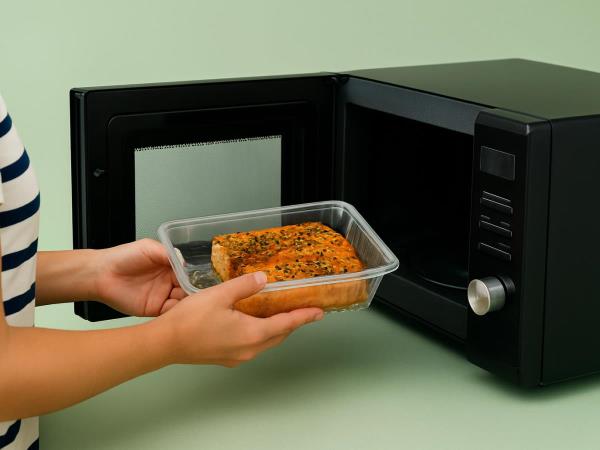
Never reheat these foods! They can become dangerous for your health!
AUTHOR:
Zvone Stor
expert, nutritionist
expert, nutritionist
Attention: not all food is safe to reheat ... Some foods you shouldn't reheat will surprise you!
Reheating isn’t harmless. This applies even to the simplest dishes. We’re talking about everyday foods like rice, eggs, or spinach ... Why is this the case, what happens to food when we reheat it, and which ingredients can become toxic?
The science behind it: what actually happens when we reheat food?
When we reheat already cooked food, its chemical structure changes—especially proteins, fats, and some minerals. Proteins can begin to break down and release substances that are no longer suitable for our bodies. Some bacteria can develop to such a degree during cooling that even reheating can't destroy them anymore—and this is the problem.
In 2023, the NIJZ (National Institute of Public Health) recorded more than 430 cases of food poisoning, 15% of which were linked to leftovers prepared at home that were stored or reheated incorrectly. That’s not a small number.
The most important advice ...
Always cool food within an hour after cooking. Store it in the fridge in a closed container and eat it within 48 hours at most. Reheat only once—every additional reheating increases the risk of harmful substances forming or bacteria multiplying.
And don’t forget—more than half of food poisoning cases happen at home, not in restaurants. Simple steps like quick cooling, proper storage, and avoiding reheating certain foods are what keep us safe.
Information on this website is for educational purposes only and is not medical advice.
The science behind it: what actually happens when we reheat food?
When we reheat already cooked food, its chemical structure changes—especially proteins, fats, and some minerals. Proteins can begin to break down and release substances that are no longer suitable for our bodies. Some bacteria can develop to such a degree during cooling that even reheating can't destroy them anymore—and this is the problem.
In 2023, the NIJZ (National Institute of Public Health) recorded more than 430 cases of food poisoning, 15% of which were linked to leftovers prepared at home that were stored or reheated incorrectly. That’s not a small number.
- Spinach, chard, kale, celery—why leafy green vegetables can become dangerous?
All these are types of leafy vegetables that contain high amounts of nitrates—natural substances that plants absorb from the soil, especially when fertilized with chemical fertilizers. Nitrates themselves are not dangerous. The problem arises when we reheat them—then they can turn into nitrites, which under certain conditions in the body can change into nitrosamines, scientifically proven to be carcinogenic (which means they can cause cancer).
In 2018, the European Food Safety Authority (EFSA) published a report that stated the highest nitrate concentrations are found in spinach and chard, where levels can exceed 3000 mg of nitrate per kilogram.
So if you cook spinach or chard, eat it immediately or cool it quickly and don’t reheat it. Rather use it for a cold dish, like a spread or a salad. - Chicken and turkey—proteins can act deceptively
Poultry meat is full of proteins that are sensitive to heat. Once it’s cooked, these proteins stabilize. If the meat is reheated, the proteins can change and become harder to digest. At the same time, bacteria like Campylobacter, which causes digestive problems (vomiting, diarrhea, cramps), might be present. This bacteria is responsible for up to 30% of all cases of meat poisoning in Europe, according to a 2022 ECDC study.
Even worse—if the meat is overcooked and then slowly cooled at room temperature, bacteria multiply very quickly. A single bacterium can become a colony of millions within a few hours!
The advice? If you have leftover chicken, eat it cold instead, like in a sandwich or salad. If you do reheat it, heat it thoroughly (above 75{-15696}C) and never leave it out on the counter for more than two hours. - Eggs—it sounds unbelievable, but reheating can make them toxic
Scrambled, boiled, or fried eggs are great for breakfast, but be careful—if you reheat them, bacteria can multiply, especially Salmonella. This bacteria is present in Slovenia on average in 1 of every 1500 eggs, but the risk increases if eggs are not stored in the fridge or are left out at room temperature.
Heat during reheating can also cause chemical changes in the sulfur and iron found in egg yolks—under certain conditions, substances can form that irritate the stomach and intestines.
That’s why the golden rule is: don’t reheat eggs. If you have leftovers, put them in the fridge as soon as possible and use them the next day cold, for example, as a spread or salad topping. - Potatoes—very common, but surprisingly sensitive
Boiled potatoes left at room temperature are an ideal breeding ground for Clostridium botulinum, which causes botulism—a rare but very dangerous disease. This bacterium reproduces in anaerobic conditions (meaning without air), which can happen if you wrap potatoes in aluminum foil and leave them sitting out.
Additionally, when reheated, the starch in potatoes changes and can cause digestive issues. Most cases of potato poisoning have been recorded at picnics, where boiled potatoes were exposed to heat and sun all day.
The solution? Don’t reheat them. Use them cold for potato salad or bake them in the oven for a nice crispy crust. - Mushrooms—sensitive to heat and time
Mushrooms contain proteins that quickly break down if stored incorrectly. If you leave them at room temperature for more than two hours, bacteria begin to develop. In France in 2016, a severe poisoning case was recorded when a family reheated mushroom soup that had sat on the kitchen counter for 8 hours—one family member ended up in the hospital.
If you do reheat mushrooms, make sure to cool them quickly (max 24 hours) in the fridge beforehand, and heat to at least 70{-15696}C. - Rice—silent and dangerous
Rice is one of the most dangerous "innocent" foods. Why? The Bacillus cereus bacterium, present in soil and water, can survive cooking and start multiplying if rice is left at room temperature. Reheating doesn’t destroy these bacteria.
In a study published in the Journal of Food Protection, researchers found that at around 30{-15696}C, the number of bacteria can double every 20 minutes! So if rice sits out for 2–3 hours, enough bacteria for poisoning can already be present.
Symptoms? Vomiting, diarrhea, cramps—sometimes just a few hours after consumption.
That’s why the rule is: always cool rice within an hour of cooking, store it in the fridge, and consume it within a day. If you’re uncertain, it’s better to throw it away.
The most important advice ...
Always cool food within an hour after cooking. Store it in the fridge in a closed container and eat it within 48 hours at most. Reheat only once—every additional reheating increases the risk of harmful substances forming or bacteria multiplying.
And don’t forget—more than half of food poisoning cases happen at home, not in restaurants. Simple steps like quick cooling, proper storage, and avoiding reheating certain foods are what keep us safe.
Information on this website is for educational purposes only and is not medical advice.
Author:
Zvone Stor
expert, nutritionist
expert, nutritionist
 Would you like to be informed about news on the website?
Just enter your e-mail
Reheating food dangers
Food poisoning risks
Dangerous foods to reheat
Risks of reheating leftovers
Health risks of reheated food
Latest news

Why Do You Always Wake Up at the Same Time? Your Body Might Be Trying to Tell You Something
Read more >>


French Fries and Your Brain: What an 11-Year Study of 140,000 People Found About Fried Food and Mood
Read more >>

Selenium: The Tiny Mineral Your Body Can't Live Without — And Can Absolutely Have Too Much Of
Read more >>

A Spoonful of Coconut Oil on an Empty Stomach: The Quiet Morning Habit So Many People Swear By
Read more >>


Anemia on Your Plate: The Everyday Foods Quietly Helping — Or Sabotaging — Your Iron Levels
Read more >>

Why the Humble Egg Might Just Be Your Diet's Secret Weapon: 5 Reasons Nutritionists Keep Coming Back To
Read more >>


Yogurt, Banana or Citrus for Breakfast? Why Some "Healthy" Foods Can Backfire on an Empty Stomach
Read more >>



Why the Scale Won't Budge, Even On a Diet: The Overlooked Mineral Almost Nobody Talks About
Read more >>


Interaktive Widgets:
|

