




Date: 01/02/2026 - GOOD TO KNOW
What Instant Noodles Are Really Made Of
AUTHOR:
Zvone Stor
expert, nutritionist
expert, nutritionist
Why Your Body Has No Special Respect for Them and How to Modify Them at Home to Make Them Less Harmful ...
Instant noodles are one of those foods almost everyone knows. They are cheap, ready in five minutes, require no special skills, and often don't even require dishwashing. In 2020, during the pandemic, lockdowns, and working from home, their sales in Europe, according to trade associations, increased by more than 30%. And today they are still very present, especially among young people, students, singles, and anyone who feels they don't have time to cook.
But here an important question arises: what are instant noodles actually made of and why does the body not recognize them as real food? Folk wisdom has a clear answer to this, and unfortunately, modern research confirms it.
Why Instant Noodles Are So Appealing
At first glance, they seem like an almost perfect meal. They are similar to pasta, have flavor, are filling, and don’t cost much. The average packet of instant noodles contains between 300 and 450 calories, which sounds like a decent meal.
But calories aren’t everything. What matters is where these calories come from and what your body has to do to process them.
Traditional cooking has always distinguished between food that nourishes and food that just fills your stomach. Instant noodles very often belong to the second group.
What’s Hiding in the Flavor Packet
The biggest problem with instant noodles is not so much the noodles themselves, but the little sachet of powder, which gives them flavor. This powder is highly processed and has one thing in common: it creates taste quickly, but has almost no nutritional value.
On average, a serving of instant noodles contains 1,500 to 2,000 mg of salt, which is more than 50% of the recommended daily amount for an adult. In 2020, research showed that more than 70% of people already consumed too much salt, and instant noodles only worsen this problem.
Too much salt in the body means increased thirst, water retention, and in the long term, a higher risk for high blood pressure. Blood pressure is the force with which blood presses against the walls of the vessels. If this force is consistently too high, the vessels and heart become overburdened.
Monosodium Glutamate – What Is It Really
In the powder, you’ll almost always find monosodium glutamate, often labeled as MSG. This is a substance that enhances flavor and creates a sense of fullness of taste, which we call umami. Umami means deep, meaty flavor that makes you want another bite.
Naturally, umami is found in tomatoes, mushrooms, and aged cheeses. Industrial MSG, however, is a concentrated version added to make food taste better than it really is.
Most research says that MSG in small amounts is not dangerous. But for some people, it can cause headaches, redness, a feeling of warmth, or heart palpitations, especially if they consume more of it.
Popular wisdom says very simply: if the food has no taste without the powder, then something is not right.
Sugar Where You Don’t Expect It
Many people are surprised to learn that instant noodles also often contain sugar. Not to make them sweet, but to balance the saltiness and intensify the flavor. One serving can have 3 to 6 grams of sugar, which might not seem like a lot, but in combination with salt and fat, it creates a strong effect on the brain. The body gets quick pleasure, but without real nutritional benefit.
The noodles are usually made from white wheat flour, water, and salt. This means they contain very little fiber. Fiber is the part of plants that helps digestion and gives a feeling of fullness. An average serving of instant noodles contains less than 2 grams of fiber, while an adult should get 25 to 30 grams per day.
But the biggest problem comes in the next step of production.
Deep Frying as a Drying Method – The Silent Problem
Most instant noodles are fried in oil before packaging, most often palm oil. Then they’re dried to make them shelf-stable and to soften quickly in hot water. This means the noodles already contain quite a bit of fat even before cooking. One serving can contain 14 to 22 grams of fat, a large portion of which is saturated fat. Saturated fats are the kind your body has a harder time processing if there's too much of them. In the long-run, they can burden the heart and blood vessels.
Additionally, frying at high temperatures can produce substances like acrylamide. Acrylamide is a compound formed when starchy foods are heated and, in several studies, is linked to increased risk of health issues if consumed frequently.
Why Instant Noodles Don’t Keep You Full for Long
Many people notice they feel full for only a short time after eating instant noodles. This is no coincidence. Food with little fiber and protein is digested very quickly. The result is that you’re hungry again after an hour. In 2025, research showed that people who regularly eat instant noodles experience greater energy swings and reach for snacks more often. Proteins, meanwhile, are body-building blocks and provide long-lasting satiety. In an average serving of instant noodles, there are only 7 to 9 grams, which is very little for a main meal.
What Folk Wisdom Says
Traditional cooking didn't know instant food. It knew soups, porridges, and stews, which were cooked slowly. The food was simple but nourishing. Instant noodles are the opposite: quickly prepared, but nutritionally empty. That’s why the body doesn’t recognize them as real food, but as something in between.
Does this mean instant noodles should be eliminated from your daily diet? No. Folk wisdom never speaks of bans, but of moderation. Instant noodles occasionally are not a disaster. The problem arises when they become a habit. Research from 2020 showed that people who eat instant noodles more than three times a week report more fatigue, bloating, and a stronger craving for salty food.
How to Make Instant Noodles Less Harmful at Home
If you do eat them, you can improve them quite a bit. This is a homemade, inexpensive solution that common sense confirms ...
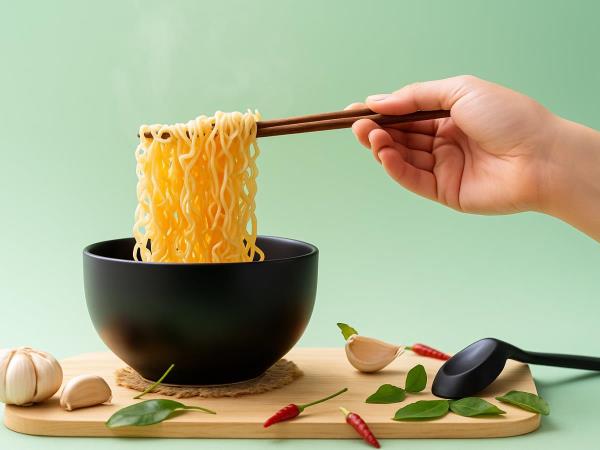
First: Use only half the powder, or skip it entirely. Instead, add your own spices. Garlic, pepper, a little soy sauce, or even salt to taste.
Second: Add real food. An egg, some vegetables, beans, or tofu. This adds protein and fiber, which slow down digestion.
Third: Don’t drink the soup to the end. Most of the salt remains in the liquid.
A Better Alternative That Doesn’t Take Much Time
If you have five more minutes, plain pasta with a bit of oil and vegetables is a much better choice. Or homemade soup cooking in advance and freezing it. In 2025, the practice of cooking for several days increased significantly, precisely because people noticed that instant food drains them in the long-run.
What’s Worth Remembering
Instant noodles are not evil, but they are a typical example of food that doesn’t nourish the body, but merely tricks the feeling of hunger. Lots of salt, fat, little fiber, and almost no nutrients your body actually needs.
If you eat them rarely and consciously, they won’t hurt you. But if they become a daily solution, sooner or later the body will send clear signals.
And as with most things in nutrition, the old rule applies: if something is too quick, too cheap, and too tasty, it’s at least good to know what’s really in it.
Information on this website is for educational purposes only and is not medical advice.
But here an important question arises: what are instant noodles actually made of and why does the body not recognize them as real food? Folk wisdom has a clear answer to this, and unfortunately, modern research confirms it.
Why Instant Noodles Are So Appealing
At first glance, they seem like an almost perfect meal. They are similar to pasta, have flavor, are filling, and don’t cost much. The average packet of instant noodles contains between 300 and 450 calories, which sounds like a decent meal.
But calories aren’t everything. What matters is where these calories come from and what your body has to do to process them.
Traditional cooking has always distinguished between food that nourishes and food that just fills your stomach. Instant noodles very often belong to the second group.
What’s Hiding in the Flavor Packet
The biggest problem with instant noodles is not so much the noodles themselves, but the little sachet of powder, which gives them flavor. This powder is highly processed and has one thing in common: it creates taste quickly, but has almost no nutritional value.
On average, a serving of instant noodles contains 1,500 to 2,000 mg of salt, which is more than 50% of the recommended daily amount for an adult. In 2020, research showed that more than 70% of people already consumed too much salt, and instant noodles only worsen this problem.
Too much salt in the body means increased thirst, water retention, and in the long term, a higher risk for high blood pressure. Blood pressure is the force with which blood presses against the walls of the vessels. If this force is consistently too high, the vessels and heart become overburdened.
Monosodium Glutamate – What Is It Really
In the powder, you’ll almost always find monosodium glutamate, often labeled as MSG. This is a substance that enhances flavor and creates a sense of fullness of taste, which we call umami. Umami means deep, meaty flavor that makes you want another bite.
Naturally, umami is found in tomatoes, mushrooms, and aged cheeses. Industrial MSG, however, is a concentrated version added to make food taste better than it really is.
Most research says that MSG in small amounts is not dangerous. But for some people, it can cause headaches, redness, a feeling of warmth, or heart palpitations, especially if they consume more of it.
Popular wisdom says very simply: if the food has no taste without the powder, then something is not right.
Sugar Where You Don’t Expect It
Many people are surprised to learn that instant noodles also often contain sugar. Not to make them sweet, but to balance the saltiness and intensify the flavor. One serving can have 3 to 6 grams of sugar, which might not seem like a lot, but in combination with salt and fat, it creates a strong effect on the brain. The body gets quick pleasure, but without real nutritional benefit.
The noodles are usually made from white wheat flour, water, and salt. This means they contain very little fiber. Fiber is the part of plants that helps digestion and gives a feeling of fullness. An average serving of instant noodles contains less than 2 grams of fiber, while an adult should get 25 to 30 grams per day.
But the biggest problem comes in the next step of production.
Deep Frying as a Drying Method – The Silent Problem
Most instant noodles are fried in oil before packaging, most often palm oil. Then they’re dried to make them shelf-stable and to soften quickly in hot water. This means the noodles already contain quite a bit of fat even before cooking. One serving can contain 14 to 22 grams of fat, a large portion of which is saturated fat. Saturated fats are the kind your body has a harder time processing if there's too much of them. In the long-run, they can burden the heart and blood vessels.
Additionally, frying at high temperatures can produce substances like acrylamide. Acrylamide is a compound formed when starchy foods are heated and, in several studies, is linked to increased risk of health issues if consumed frequently.
Why Instant Noodles Don’t Keep You Full for Long
Many people notice they feel full for only a short time after eating instant noodles. This is no coincidence. Food with little fiber and protein is digested very quickly. The result is that you’re hungry again after an hour. In 2025, research showed that people who regularly eat instant noodles experience greater energy swings and reach for snacks more often. Proteins, meanwhile, are body-building blocks and provide long-lasting satiety. In an average serving of instant noodles, there are only 7 to 9 grams, which is very little for a main meal.
What Folk Wisdom Says
Traditional cooking didn't know instant food. It knew soups, porridges, and stews, which were cooked slowly. The food was simple but nourishing. Instant noodles are the opposite: quickly prepared, but nutritionally empty. That’s why the body doesn’t recognize them as real food, but as something in between.
Does this mean instant noodles should be eliminated from your daily diet? No. Folk wisdom never speaks of bans, but of moderation. Instant noodles occasionally are not a disaster. The problem arises when they become a habit. Research from 2020 showed that people who eat instant noodles more than three times a week report more fatigue, bloating, and a stronger craving for salty food.
How to Make Instant Noodles Less Harmful at Home
If you do eat them, you can improve them quite a bit. This is a homemade, inexpensive solution that common sense confirms ...
First: Use only half the powder, or skip it entirely. Instead, add your own spices. Garlic, pepper, a little soy sauce, or even salt to taste.
Second: Add real food. An egg, some vegetables, beans, or tofu. This adds protein and fiber, which slow down digestion.
Third: Don’t drink the soup to the end. Most of the salt remains in the liquid.
A Better Alternative That Doesn’t Take Much Time
If you have five more minutes, plain pasta with a bit of oil and vegetables is a much better choice. Or homemade soup cooking in advance and freezing it. In 2025, the practice of cooking for several days increased significantly, precisely because people noticed that instant food drains them in the long-run.
What’s Worth Remembering
Instant noodles are not evil, but they are a typical example of food that doesn’t nourish the body, but merely tricks the feeling of hunger. Lots of salt, fat, little fiber, and almost no nutrients your body actually needs.
If you eat them rarely and consciously, they won’t hurt you. But if they become a daily solution, sooner or later the body will send clear signals.
And as with most things in nutrition, the old rule applies: if something is too quick, too cheap, and too tasty, it’s at least good to know what’s really in it.
Information on this website is for educational purposes only and is not medical advice.
Author:
Zvone Stor
expert, nutritionist
expert, nutritionist
 Would you like to be informed about news on the website?
Just enter your e-mail
Instant Noodles Ingredients
Health Effects of Instant Noodles
How to Modify Instant Noodles
Impact of Monosodium Glutamate
Instant Noodles Nutrition
Latest news





Four Ingredients Every Kitchen Already Has: The Morning Drink Healthy-Living Fans Swear By
Read more >>







After 40, the Pounds Don't Just Appear – Your Body Is Sending You a Message Most Women Misread
Read more >>

The Humble Bean That Takes On Cholesterol: Why Legumes Are Not Just Peasant Food but a Friend to Your Heart
Read more >>

When a Kids' Drink Beats Sports Drinks: What Science Really Says About Chocolate Milk After Training
Read more >>

Interaktive Widgets:
|

